26 April, 2013

How to Keep Writing, by Lorrie Porter


I was lucky enough to stumble upon Lorrie about a month ago. She's an awesome writer with an awesome blog in a similar vein to this one, and I know you'll all enjoy her post as much as I did. Check out her blog for more great advice. Here's a post about how you should never give up. 

Even when...
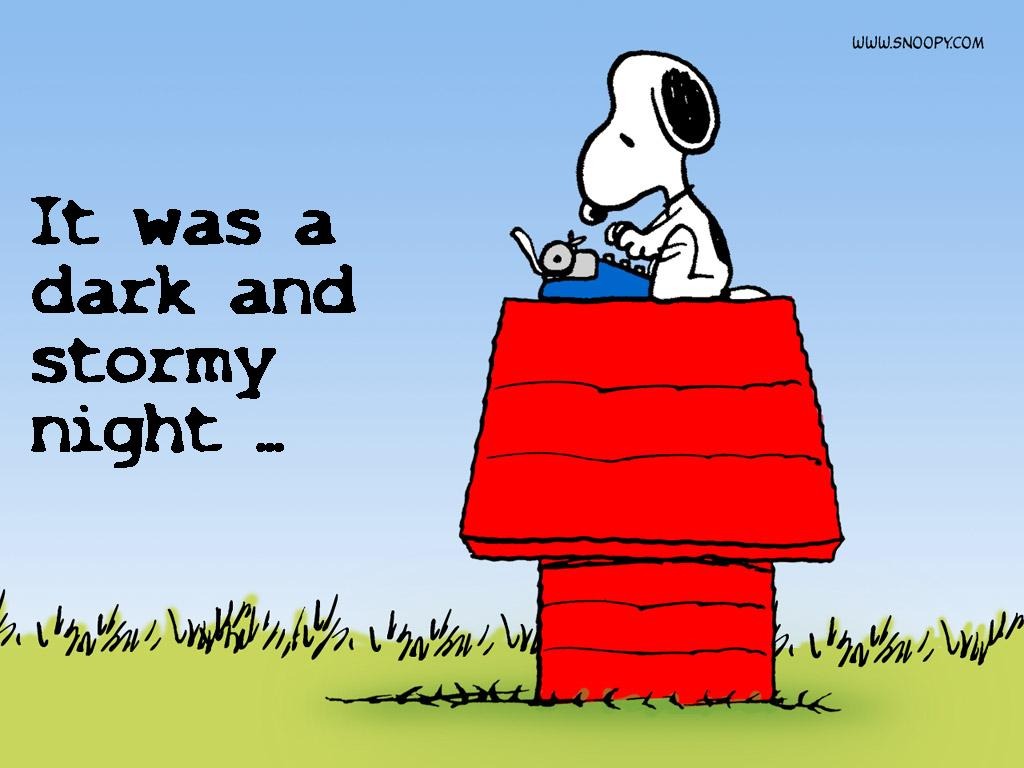

Lorrie stood up and did this:


Being a fiction writer isn’t easy. It isn’t like other jobs. When you clock in to work at a factory, or a desk job, as an airline pilot or a bar tender, you know what you’re expected to do, you have a pretty good idea how to do it, and a confidence that you can.

Writing is different. I am yet to meet a writer who hasn’t doubted about their ability to write. We are plagued with questions: Am I any good? Can I do this? Am I wasting my time?

You may think the way to defeat these doubts is to improve your writing style, to immerse yourself in writing craft, to learn what makes a good story, and you’d be right. All of these things are important. But there is one essential quality every writer needs if they’re going to succeed and that is … their stubborn refusal to give up.  Ever.

Starting out as a writer, your refusal to fail keeps you going through each and every painful rejection. But surely, once you achieve the dream, once you get that signed publishing deal, you can let yourself breathe. Your book is going to be on the shelf at Waterstones. It’s all easy sailing from here, isn’t it?

In December 2011 I signed a contract with a small but reputable publishing house for two YA novels. The first book was due out in February 2013 and I had twelve months to work on the second manuscript. I did what any sane person would do. I quit my job and started writing full-time.

You’d think writing the second book would be easy, knowing the first had proved worthy and would soon be available in bookshops, but all the publisher had seen of the second book was a sketchy synopsis. What if they hated it? What if I couldn't repeat the magic? But when you have a signed contract, dwindling funds in the bank and a deadline looming, you have to knuckle down and get on with it. That stubborn refusal to give in can come in very handy.

So I faced the blank screen every day, and filled it with words. I didn’t know if they made sense, but it was only a first draft, and with first drafts you have to give yourself a break. I read books on writing craft, analysed texts by published authors, gleaned every grain I could to make my second book as good as my first. I had to have faith. I had done this once. I had to believe I could do it again. After all, I was an author now.

And then I got an email from my publisher. They’d been taken over by an American company who no longer wanted to develop their Young Adult list. My contract was cancelled, all rights returned.

I wasn’t an author any more. I had no job, no soon to be published book, no nothing. All I had was a completed novel no one seemed to want, and a ropey first draft of my second book. And I have to admit, for a split second, the thought went through my mind: Why am I doing this? Why don’t I go back to a job I know I can do, with a salary and financial security? But it was only a split second.

Because I have that essential quality found in every writer; I am stubborn. And I will not give up. I don’t know if I will succeed in my dream to become a published writer. But I do know this. You haven’t failed until you’re dead and even then you haven’t failed because you kept true. You wrote.

Whatever you believe in, it’s by act of faith you believe in it. And it’s that faith which keeps you strong, gives you purpose and helps you through the dark times.

Fight the fear. Keep the faith.


About Lorrie

In a fit of youthful enthusiasm Lorrie Porter graduated from University College London with a degree in Ancient World Studies then went on to qualify as a teacher in Classics. She loitered for many years in a solicitor’s office where she spent a lot of time staring out of the window. However, her fascination for dead languages and civilizations continues to thrive. She has recently graduated from Manchester Metropolitan University with an MA in Creative Writing.

Lorrie writes fiction which embraces a dark and emotional aesthetic and is currently working on Cradlesnatch, a story about a monster who steals children. Her first novel, Fury, has wolves, bandits and other miscreants among its pages.

Her love of writing craft inspires her blog at This Craft Called Writing, and she can be found most Saturdays delivering writing workshops in and around Manchester and Cheshire.

Lorrie lives on a narrow boat with her talented husband and impervious cat.

21 April, 2013

13 Lessons Learned from Stephen King, and a rant by... erm... me.


For the full-sized picture, please click HERE. This is the largest I can make a picture in a blogspot post, for some ungodly reason.

I wanted to include it on the blog to offer some thoughts. I won't rant much. We're talking about Stephen King here, and his book, On Writing, is among the best of its kind.

All of these statements are golden, but there's one thing I'll say: DO NOT THINK OF THESE AS RULES.

Stephen King wouldn't want that. No good writer would. Nor would a good teacher. This is art, not math.  You will find your own interpretation and approach to every problem you face or lesson you learn.

So here's my nit-pick. He says "1st draft - 10% = 2nd draft."

No. Do not expect your first drafts to only need a snip. Unless you're already a very experienced novelist, your second draft will probably involve a great deal more work--quite possibly nearly a total rewrite in order to tighten the emotional thrust. Take it seriously.

Each writer will discover their own approach. For some, the first draft is only an attempt to pin down the story. Paul McAuley, who has been nominated for an award for almost everything he wrote last year (seriously, almost every short story, and the novel) said to me that his first drafts would get rejected from magazines, if he were ever fool enough to submit them. I suspect he was exaggerating, but his point stands. Work on your story until it is the best you can do, not until you think you can get away with it.

But here's the part where I get to sing Stephen King's praises again, and directly related to my caveat, too.

"Teach yourself," he says. Smeg right. Find your own interpretation of what anyone tells you. Learn by practise. Remember what Thomas H. Uzzell said about the average writer needing to hammer out around a million words before developing his or her own style. Write a lot. Read a lot. (Stephen King also says, "If you don't have the time to read, you don't have the time, and the tools, to write.") Keep doing those and you'll get there. The only expectation you should have is that if Stephen King or whoever floats your boat can succeed, so can you. Every book on your shelf is a monument to the fact that this is an achievable goal.

14 April, 2013

Can You Do Better than Others? by M.R. Jordan


Writer and editor M.R. Jordan on the arts of everything from nannies to camel jockeys, and finding 
and exploiting your own unique talents.


The plot to Supper Nanny is pretty simple. Supernanny comes in and implements the same techniques each week and then nails the parents to the wall for inconsistency and lazy parenting. Families are transformed. Part of the draw of this show of course is seeing the infinite ways in which kids can be horrible and a secret hope that Supernanny will finally meet her match. She never does. Perhaps this is due to tricks of the camera, but my time teaching ESL showed me the extent to which children are hardwired to please. This last part is an observation, but not important to this topic.

What is important is that despite using the same techniques for child discipline and nailing parents to the wall for years, Supernanny has no shortage of families who need their help.

Q. Why don't people just implement the techniques on their own? Think about this a minute before you read my answer.

A. Think about the question some more. No, that's not my answer, silly, but I know you're reading this a half a second after reading the question.

Do you want the answer now? Of course you do. Perhaps you're the kind of person who likes to know what other people think before forming an opinion of your own.

Keep thinking…

Okay, now for my opinion on this subject. It's not laziness or ignorance. The average person cannot watch a how-to video, read a how-to book, or watch Supernanny and implement those skills successfully. Give any child or adult who has never backed in their lies an instant cake mix and watch them struggle to follow the directions. Most people are hardwired to learn from other people. This is why universities don't just hand college students a book to read and expect them to know the contents of said book.

One of the things I can do that most other people can't is learn from a book, only a book, and nothing else but a book. I used a lot of words to tell you this, but I have, what I think, is a grand a point.

This is my strength. I'm using it to educate myself about marketing and business and Excel. Whether you are a writer, song writer, camel jockey or candle stick maker, you have internal assets at your disposal right now. Life lends itself to focusing on external obstacle and it's easy to forget our assets. Don't be the silly reality TV star who says "I think I deserve to win more than anyone else in the house," or "tribe"… whatever. Not a single person thinks they don't deserve to win more than anyone else. Think, instead, what asset you can bring to the table that others can't. Let's say you’re a camel jockey. It's a well established fact that camel jockeys have to be sequestered the night before a race. Otherwise they'll get so drunk, they will fall of their camels during the race. See * for more information about Sequestering camel jockeys to prevent consumption of copious amounts of alcohol syndrome. (SCJPCCAAS) Perhaps you can drink like a fish and stay on your camel. This unique trait gives you a unique advantage over all the other jockeys.

Do you have traits that others don’t? What are they? How can you use them in your pursuit of dreams?


* SCJPCCAAS: This is probably not a real thing, which makes me sad. The world would be more awesome if it was.

10 April, 2013

"Ya-hoooo!" and "Let's-a-Go!" (Nintendo fans will understand.)


Last Saturday I sent my novel's first palatable manuscript off to my agent!!!!

!!!!

           !!!!    


!

I'm pleased with myself, as you can probably tell!  This post will be riddled with exclamation points...!

I thought I'd share with you what I've been told. As promised, I'm going to yap about everything I learn of the publishing industry as I smash further and further through the battlements. (!) There's nothing ground-breaking thus far, but if I wait until I learn everything, we'll wind up with one long, hard-to-read rant instead of a series of single points, so in the spirit of a short story writer, I've made the decision to share.

I had three misconceptions when I sent my manuscript in. Four if you count the one that doesn't quite count.

The first is that I thought old-skool agents gave full editorial analysis of your work. Leslie told me she'd give a "reader's analysis", which is what I'd thought editorial analyses to be. Apparently, editorial analyses are quite in-depth, not just going into what the work could do better in an overall sense, but actually commenting paragraph by paragraph. That sounds awesome, and I can't wait.

(!)

Which leads me to number two: I have to wait. Leslie's first piece of advice was that I should leave the manuscript alone for about a month, and do what I can to distance myself from it. The wrong kind of excitement can kill a story. When Ray Bradbury wrote of "zest and gusto" he was referring to excitement about ideas, and writing when inspired. Getting excited about a deadline, and letting yourself fall in love with your own work, are both wrist-slap-worthy. The former boils down to impatience. The latter stops you from being able to distinguish "baddies" from "darlings" (see "Kill the Baddies, Not the Darlings" under Writing Advice).

So I decided to start another novel. I think an new project is the best way to distance myself. As is the fantasy of all younger siblings, having a new baby should be the best way to distance myself from the previous. Take that, Mario, you arrogant bastard.


Little brothers get Luigi.


The third thing, and the one that doesn't quite count, because I already knew, was that it's nowhere near over. There will probably be two re-writes with Leslie's help. Then there's waiting to see if she CAN sell it. Then there's the editorial process. Then there's awaiting publication and hoping the publishers don't go bankrupt or drop their department or anything else before the book gets published. I'll keep you informed about the process as I learn, so expect many more posts on the matter.

Whenever I tell my friends about finishing my draft they say something along the lines of, "That's great! When will it be in print?"

The most healthy professional response is probably, "I don't even know if it will see print yet, and I'm trying not to get my hopes up, so shut the f**k up." But we can't talk to our friends that way. I always wind up saying, "I'll let you know!" or "Hopefully one day!" at which they always laugh, thinking I'm just trying to sound charmingly humble.

It's good to get excited sometimes. Everyone says I should be pleased with myself, and of course I appreciate the enthusiasm.

The fourth thing I've learned, though, is that "pleased" isn't the right word. I want to share the feeling with you because it's like nothing I've experienced. It's not overwhelming relief or joy. It's not exactly worry that Leslie will hate it, either. I know the story doesn't suck, even if I'm not positive she'll love it. I just feel numb and eagre to write something new. I was supposed to take this week off. I certainly deserve a break, but I don't want one. I can only express this as the feeling of having something on my mind that refuses to articulate itself. "Numb confused happiness" is the most honest descriptive stab that comes to mind, but I honestly think Luigi says it best.

Note: when you select Mario he says, "Ya-hoooo!" or "I'm a-number one!" like the arrogant bastard he is. Luigi, always ready for a scrap, says "Let's-a-go!" which is roughly how I feel. Moreover, I believe Luigi's attitude is the correct one. He is the superior warrior, for he will always fight to improve, and arrogance will be Mario's downfall.

Exclamation points of all variety and connotation are springing around in my head (!!!!!!!!!!!!!!!!!!!!!!!!) and I feel ready to scrap, so... Let's-a-go!

06 April, 2013

Kill the Baddies, not the Darlings


This is actually something Scott Bradfield used to make me do. It was one of my first exercises, just to improve my awareness. He'd take a manuscript, slaughter the first page, and then we'd slaughter the rest together. Within a month my prose was clearer and my stories were shorter. Prose, I came to understand, is a conduit from reader to content. If something's in the way, return with a battering ram.

However...


Things shouldn't just die because they don't serve some cold, logical purpose. It isn't a question of unnecessary words. That's a rather limited understanding. Scott was training my awareness, not stuffing me into a minimalist doctrine. Emotional effect is what you're going for in narrative. If you're thinking in terms of logic, you've got your eye on the bullet, not the target. And in editing, you're a kittie with your eye on the road, not the traffic.

It's usually true that being long-winded will distract your reader. They want to know what's going on between the characters, not how many adverbs you can fit into a sentence. But this does not mean you have to chop all description from your prose. Find me a best-selling, time-enduring novel that doesn't have some linguistic flare. You can't, even by trawling through famously pared back stylists like Chekhov, Steinbeck and Elmore Leonard. Theirs will just be carefully written and carefully placed.  (Note my writing "carefully" twice there for emphasis, although it served no logical purpose.)

Take, as an extreme example, a novel where we're following the POV of a loquacious struggling painter, who ineptly attempts to capture the beauty around him, which is his one true obsession. Let's say it's written in the form of a diary. Let's say that in the first chapter, you've done your job. The reader is in love with this character and his voice. He's loquacious. Strings of unnecessary pronouns and "ad-words" are part of his voice. This might be a harder story to make work, at least on the level of prose, but it's a telling example. In understanding a guideline you must always be aware of the exceptions. If you aren't, you don't understand the guideline.

"Kill the darlings" is good for students to hear, because the craft of writing is all about acquiring empathy with the reader. If you're trying to show your flare with words, you're focusing in the wrong direction. Beautiful writing, from the poetic to the stark, springs from empathy.

Note, "Kill the darlings" also refers to scene choices, and the same concept applies. Don't try to show how cool a scene is. Think of what the story needs from it. Then amplify, and it'll be a darling worth keeping.

30 March, 2013

The Magical Addiction of Publishing, by Jayne-Marie Barker


Awesome Mystery novelist and book/publishing addict Jayne-Marie Barker gives insider insight into the publishing process:

When I opened the letter from my publisher notifying me that they wanted to publish my first novel, I literally leapt up and bounced around the living room in ecstasy. It was the moment I had been waiting for as long as I could remember. That one second when your life long dream comes true. Naturally, ambition and hard work had got me that far, but even so, it felt like the world was smiling at me.

Publishing is an interesting business, and one you cannot possibly comprehend until you join it fully. I knew nothing about the world of publishing when the contract for 'Beneath The Daisies' was signed. I learnt, quickly. I learnt the various stages a book goes through when production commences. I learnt that the proof reader could be wrong, and that the editor was not necessarily going to say, "yes, I love your book, I don't want to change a single thing!" Life is never that straight forward.

Proof readers and editors, agents and graphics teams are all on your side, even if you don't realise it at the time! Everyone is looking for the best result, the final product, the finished book. By the time I started the round again with 'Distant Shadows', I was wiser and the whole thing felt smoother. Knowledge is a wonderful thing!

I tend to think of the production of the printed book like a conveyor belt. First, it is added to the publishers computer system. Let's gloss over the editor stage as this can vary considerably from book to book. Secondly, the proof reader reads through and marks the margins with comments, spellings, suggestions, and generally any thoughts they have whilst reading it. Thirdly, the marked manuscript is sent to the author for agreement/disagreement. This processs is repeated, the first round of changes being implemented, and then the proof reader has another go... When the revised manuscript arrives back for the second time, the author must ensure they are happy with it. This may be the last opportunity to make adjustments to the text within the covers.

The final stage of the production is the book jacket or cover as some people prefer to call it. Once the cover illustration and text is agreed between author and publisher, it goes to print... This is the final and most exciting stage, partly because as the author the job is finally completed, and partly because the release is drawing close.

Life as an author is sometimes a surreal thing. When you receive your personal complimentary copies, it's as if someone has handed you a bar of gold. It really is beyond words, which is never a good thing for an author to admit to!

The publishing industry, like most businesses these days, runs on a cut throat scale. Every book must turn its profit and make its mark on the world, but here, the world of publishing ends and that of promotion, marketing and PR commences. This is an entirely new venture for most authors. By nature, most authors are quiet thinking types. By nature, advertisers and people belonging to the world of promotion, are not. This means that authors have to learn how to market their work, how to promote and advertise it. Let's skip back to the safer domain of publishing for a moment and you'll see what I mean...

A publisher is an animal of the modern business sphere. Every publisher must compete with every other. Every book must compete with others in its genre. Every author must write another book better than the first. It's a tough world but one people can't help but fall in love with. Now there's an unusual ending for a crime writer!

Jayne-Marie Barker
www.jaynemariebarker.com

22 March, 2013

Messing with Minds

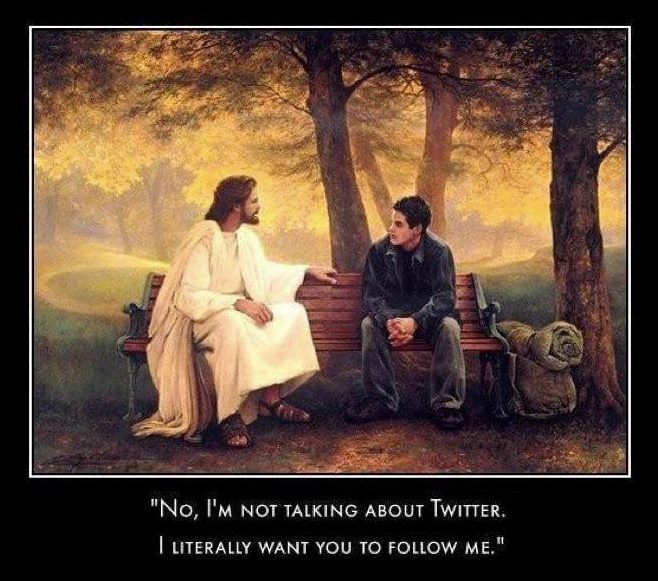
In plodding through my second novel, I've had to garner a very close relationship with a reader's expectations. They always have them, persistent through the narrative. It's like you're saying "Follow me. Follow me," and the reader decides to take your hand. If you stop, tell her you're in a forest instead of on a sand-dune, yell "Fooled you!" or just jerk her arm too hard, she's not going to be pleased. She'll probably follow somebody else and not trust you next time you call from the bookstore shelf. She might even "un-follow" you on Twitter, which as I understand things is, to the latest generation of teenagers, what a punch in the face was to all previous.

That doesn't mean you should fulfill the expectation. Quite to the contrary.

I've actually heard authors say things like "Always give the reader what they want." Or even, "Always take the reader where the reader wants to go."

Smeg. Those sound like some truly boring books. China Meiville, the only author (so far... grrr...) to win three Arthur C. Clarke awards, says something quite different: "My job is not to give the readers what they want, but to make them want what I have to give." That seems a far more ambitious task, and if you want to write interesting, award winning work, you'll need to take on the bigger challenges.

China points to a deep understanding--one of making your work impact upon the reader.

He's also speaking in terms of a very broad concept. If you're a regular reader, you'll know that my tendency as a teacher is to boil those down into something you can actually use.

It was John Steinbeck and Graham Greene who taught me most about readers' expectations in the narrative. For a little reading exercise, you might take a look at "The Moon is Down" by John Steinbeck. I choose it here because it's like 100 pages long. Each character is introduced with just a snippet of exposition, enough that you feel familiar before they start talking. Now look at how every piece of dialogue fulfills that sense of familiarity, and even makes you savour the exposition at the start. It's so constant, they would have felt like caricatures of themselves had Steinbeck done things poorly. Again, ambitious tasks are the hardest, but they pay off the most.

People's minds work along with the story, even on an unconscious level, and as a writer it's your job to understand what they're thinking and feeling. Try to think from the reader's perspective. You're trying to manipulate their imaginations.

When I taught formally I used to, at this point, get my students to pick a short story from their favourite author.  If that author didn't write short stories, I'd say "Use your second favourite. You get the idea." Now make yourself conscious of your expectation. Write it down as you go. Again, your primary focus should not be on the logic. Write what mood you're in, what you expect to feel next. Try to articulate why (there's the logic part).  Now, write a scene, the start of a piece. A shorter piece will work far better, here. You'll naturally use those same senses you've exercised. Once it's written, do the same reading analysis exercise as before.

In class I'd get students to do each others' too, of course. The internet can't quite achieve the same thing, but find a writer friend or even post in the comments below. I know some good online communities and some other subscriber might even want to correspond.

Senses need a lot of exercise, both in study and practise. Don't expect perfection right away. It's like a musician improving their aural skills. They listen to music and keep it in mind, try to hear the notes. Do the same with your reading. Rinse. Repeat. Read and write until your pre-conceptions explode, messily, and new, better ones take their place in your mind. That last bit is where the post's title becomes a pun. See what I did there? See? That's an example of doing things poorly. I didn't maintain your expectation so the reference came out of nowhere and just looked stupid.

20 March, 2013

The Horror

What a clever species we are.

I don't know about you, but Google's latest patent, "Douche-Goggles", concerns me deeply. For my writing, it's not space journeys and scientific sky-pies that interest me. It's the sociological ramifications. Our lack of regard for the non-scientific tells us more of ourselves, and the nightmares we'll walk into, than anything our tinkering engineers will concoct.

Science fiction, to me, provides infinite metaphors of our disregard for the human.
 
Now, Google's latest metaphor is a powerful one--perhaps more so than any story to which I can aspire, so I'll just sit back in awe. Watch the first video, then spot the similarity three minutes into the second.


If only humans weren't insane. Much as I love Pearl Jam, Nirvana's lyrics hit the nail on the head with, "Empathy is what we lack. Doesn't matter anyways."

To be constantly connected to our virtua-friends is to be less connected to our non-virtua-reality. There is only so much span for attention in the human mind, and only so much time in a life.

A lesser note, and one that critics actually are talking about: what will happen when everyone feels they could be constantly recorded by those surrounding them? Sociological ramifications have been proven many times to be beyond the comprehension of the thoughtless Google think tank. (There's a great Storyville documentary on Google Books, called "Google and the World Brain". I highly recommend it.)

Sadly, Douche-Goggles will still be worn by douches everywhere one day. Perhaps "Ok Glass, deploy parachute!" won't always work when douches are skydiving.

15 March, 2013

I'm Back

First off, sorry to my subscribers for the series of random posts today.  I was trying to figure out how to make multiple pages, which in Blogger, as it turns out, does not involve the multiple page options.

Second, GET IN!  I've just figured out that rather than the aforementioned involving "pages" per se, it's accomplished via post labels and a special gadget.  So much for clarity.

Third, sorry I've been gone for awhile.  I was incapacitated for a week with illness.  I wasn't sick.  I was just completely screwed.  Remember when I said about being a martial artist?  Well, I was pretty hardcore around six years ago.  I tried doing one of my old training routines and I completely did myself in a quarter of the way through.  I was bedridden.  I'm proud that I could push myself hard enough to actually damage my internal organs, but all the same it wasn't exactly wise.  I think I'll build myself up to my old level of fitness slowly and sanely from now on.

So here I am writing again, and existing on the web-o-sphere while I'm at it.

I've re-shaped the blog somewhat.  I'll still post writing advice, but I'm going to include some elements about myself.  Back when I started the blog, narrative craft consumed my entire life.  I studied it voraciously.  I taught it at Kingston University London for a year, and after moving up to the Midlands I privately tutored.  Basically I love writing and teaching.

The week before Everest by Fog started, I was sitting in a pub with my brother, who is real job haver and everything, and I told him that I had a blog and didn't know how to market it.

"You sell stories, right?" he said.

"Yeah."

"And your readers don't have anywhere to learn about you?"

"They have.  But I don't know how to market it."

"What's your blog about?"

"Erm... me... and stuff."

"Every teen-aged kid with a computer has a blog about 'them and stuff'.  What do you have to offer that's special?  Give it a theme and market around that."

Aha!  I can offer my one true obsession, and even make myself not look insane!  So off I went, and within one month I went from having 20 views per month to having 300.  Now I'm at 600 and steadily growing.  But I think it's time to move things forward.  There's more going on with me than learning the craft.

I'm studying Sociology, English and Creative Writing for a PhD come September.  I'm going to learn all kinds of cool stuff and I'll have a zillion thoughts on how to apply those things to writing.  I'm completing a novel very soon and I'm going to learn all kinds of neat stuff about the publishing industry from the inside.  My novel research dearths some pretty cool facts.  Especially when I wrote short fiction, which I shall be doing again soon, I constantly scanned about for scientific and political facts that inspire me.  Basically, there's more to me than writing advice and I shall start offering it.

For those of you who just like the stuff about writing, it's all still here.  I'll still post on a regular basis, and I'm sure it will consume the majority of my blog.  For the rest of you, the rest of me will be here too.  Everest by Fog is about "me and stuff" once more.

05 March, 2013

Chekhov's Pistol

"If in the first act you have hung a pistol on the wall, then in the following act it should be fired.  Otherwise don't put it there."  Anton Chekhov

This is the most common quote Creative Writing tutors use as an example of foreshadowing.  One tutor of mine took it to another level, just saying that it ought to go off by the last act.  That made a lot more sense, and was actually true.  Hannibal Lecter didn't need to have his true nature revealed in Act Two, for instance.

He was going deeper into the true meaning of the phrase, and I'd like to take the interpretation a step further, into the realms of psychology.

A lot of new authors, myself included back in the day, think Chekhov should be referring to something specific.  Not necessarily a pistol, of course.  That would be stupid.  But I did think he meant the stuff you introduce at the start better be the exact same stuff you use later.

"Pluto Nash," I thought.  (Sorry to swear.)  "I've read tonnes of awesome books that don't follow that rule.  Maybe he just meant mystery novels."

But, by Eddie Murphy's career (sorry again), I was wrong.

If foreshadowing only involves specific objects, it cannot persist throughout the narrative.  Your main character is not going to have the gun attached to his face.  Think of it more like a direction of things.  In the first scene of Greene's "Our Man in Havana", Wormold is sitting with his friend in a cafe.  I don't want any spoilers, here, so suffice to say Wormold sees some stuff, has a conversation and then leaves for a reason.  All of these elements set a tone, and establish the nature of the narrative.  Otherwise Greene wouldn't have put them there.  Vital characters are introduced and everything that comes later will make the first scene feel relevant.

For about a year after reaching this understanding, I went about being right in the wrong way.  I thought Chekhov was saying that the beginning had to justify the rest.  That's true, but I was thinking in terms of rationale.  That's not the playdough an artist moulds.

Chekhov's point proves that the pistol analogy makes sense.  I think he was using a weapon simply for emphasis.  The beginning should dramatise the rest.  Click-click bang in the reader's face.

Paul McAuley said to me, "Always refer back."  As always, the reasoning is far more important than the statement itself.  A reader starts with a natural expectation:  that your book is about something and that it will carry forwards.  The first indication of the story isn't even your first sentence.  It's the book's cover.  But your main job starts with the opening scene.  Demonstrate your book's "something" in dramatic fashion, and in every bit that follows, use the drama you've built.  If you find yourself naturally referring back, take it as a good sign.

Another misunderstanding of mine was that I used to think building the drama meant I had to mix things up, change things et cetera.  You have to understand that you start out having the reader's trust, and they're trusting everything they read to feel powerfully, evocatively relevant to what follows.  When a bad novel breaks that flow it isn't just disappointing, it's jarring.  There's a difference between screwing with your reader's head and artfully manipulating their trust.

Just remember that if there's a dancing monkey on the desk in the first act, the reader expects that monkey to empower all that follows.

24 February, 2013

Yay! I'm just like Damon Knight!

We both did something stupid.

In his book, Creating Short Fiction, Damon Knight says, "I remember how hungry I was to write anything that would get published."  Knight goes on to say that he forgot, for a time, to write things he truly cared about.

Now, when I could write a structured story, I knew it.  In the past, I'd told myself many times.  I'd convinced myself and whined when things got rejected.  Every artist goes through this phase.  But honestly, when you understand dramatic structure, and you can see what the stories on the bookshelf are doing scene by scene, you truly will know when your stories look the same.

Then I went through my most annoying, frustrating malaise of all time.  This was right after I got my agent.  I was so eagre to produce anything that could get published, I lost sight of how to produce something good.

I got a bunch of frustrating rejections.  I knew my stories were well written.  The top markets rejected them and I wanted to know why.  When I say top market, I literally mean the places that publish award-winning stuff on a regular basis, so I wasn't upset, but I was curious.

The almost top markets, the ones that pay the same rates but don't get submissions from my mentors, gave me personal feedback.  They usually don't bother.  They get thousands of submissions per month and only about twenty of those get serous consideration.  "This is very well written," they always said.  "But the drama lags in the middle."  Or, "I'm just not sure it's got enough punch."  Or, "The idea just wasn't interesting enough for me."

That really pissed me off.  I always used to be complimented on my ideas.  Even when my stories were trash, I have never met a professional author or editor who didn't like the ideas.  And if I didn't like them, even better than the other published authors', I'd write different ideas.

Did I just plain suck?

Yes.  I did, at that point in my life, actually suck.  Leslie (my agent) told me I was rushing.  "You don't understand," I wanted to say.  "I'm fast!"

I was doing two things wrong.  I was trying to impress Leslie by showing her that I can write three short stories a week and still have time for chess club, my rock band, martial arts and Skyrim addiction.  Also, I was desperate.  I knew I was right on the cusp of something I'd longed for my whole life.  I'd finally found the pistol and I shot before I aimed.

Knight once said to a Clarion student, "You need to learn to sit at the keyboard and open a vein."

When I look at my three a week, desperately churned out stories (there are like 20 of them) they are well written.  They are also mostly piffle.  I can only find among them three ideas that I really like, and none that I truly love.  The story that caught Leslie's interest, I should add, wasn't all that well written by my present standard, but I did truly love the idea.  It was something I'd been trying to write about since I was a teenager.

That said, another interesting thing happened.  I sent the well written piffle to lesser markets.  Pro markets were telling me I was a good writer.  Semi-pro told me I wasn't.  Token payment markets went "Ack!  This doesn't begin with dialogue!"  Some of the most famous stories in history begin with artful exposition.

(Note:  By "artful", I mean it's exposition in motion, which is to say action is happening around it--MOST of the time.  In the works of John Steinbeck, Rudyard Kipling, Edgar Allen Poe and many others, the exposition is often pure, right in your face with no action what so ever, setting the stage for the action to follow.  It's a legitimate technique.)

So the more I went down the ladder, the less people liked my work.  It seems paradoxical, but it's telling.

Now, let's not talk about the token markets.  If you're interested in writing, your journey will not end there, and anywhere that has such stringent rules about openings is not a healthy place from which to learn.  That attitude means they do not understand what a story needs.  As for semi-pro and pro, take notes.  There is something you're not doing, and even if a rejection is cruel (the guy from Pseudopod is vicious) you can use the information.  I had thought my stories were just not quite tweaked enough for a pro market.  The semi-pro rejections were confusing and they hurt, but in the end they taught me the most.  They don't normally publish really well written stuff.  Otherwise they'd be pro.  They also don't publish piffle.  Otherwise they wouldn't exist.  I implore you, write the ideas you love.  It isn't writer's block if you have to sit and ponder for a few days.  Pondering is different from playing Skyrim.  It's still an honest day's work.

07 February, 2013

The Pen should not be mightier than the Headsman's Axe

I learned a lesson today that I'd like to share with you.

This is something every writer will tell you, and I must have told myself six hundred times before now, and I'm sure I'll have to tell myself again by next week.  Hopefully by seeing my rant in text here, it'll help some people.  Hopefully hoping you people will read my rant will help me.  God I love convoluted sentences.

Elmore Leonard in Ten Rules on Writing said, "If it looks like writing, delete it."

In the past two hours I've written 1,500 words.  In the past one hour I've written NOTHING!  Zero words.  You know why?  I sat there trying to smash this four paragraph section into my second draft because I liked the way it was written and it seemed like it would make sense there.  But if it belonged there, I wouldn't have had to cram it in!

Trust your instincts, Luke.  Damn it.  That goes for all of you, too.  Trust that if it feels like you're trying to "prose" your way through something, give it a battle axe instead of a pen and chop it's f**king head off.

Another famous expression is "No tricks."  I think that's also Leonard, although I'm fairly certain Damon Knight said it in Creating Short Fiction decades before.  It's something he pounded into the heads of Clarion students.  All of these expressions have extremely vague meanings and it's one reason learning to write is such a pain in the lower quarters.  My theme here is always to trust your own interpretation, because you're ultimately teaching yourself.

So here's an unusual interpretation for you, combining both quotes.  "If you feel like you're trying to trick your reader or your story into accepting a thing, kill it and then slap your wrist."

I also hereby copyright:  "Black ink should not be mightier than the Red Line of Death."

Now back to writing.  If the next two hours provide 3,000 words, maybe I'll stop slapping my wrist.  (I've learned to do it between paragraphs.)

Ow!

20 January, 2013

Life Versus Lemons: Yum!

"I can't accept not trying," wrote Michael Jordan in the greatest book on inspiration of all time.  It's also the book's title.  You should look it up.  It's only 32 pages long.

"Success occurs when your dreams become bigger than your excuses," said Ebenezer Ghansa, Chief Instructor of the Gurkha Infantry and Senior Instructor of the world's most active and elite special forces squad, the 27th Anti-terrorist Division of South Korea.

Ebe taught me martial arts, and instilled in me the attitudes that have, I believe, helped me learn to write as much as anything. How could martial arts possibly be applicable to writing? Ever seen/read Fight Club?

This message is, hopefully, charmingly simple instead of just making me look like a smeg-head. :-)

I hope that smiley face helps.  Here's another.

o<:->   (That's an attempt at Santa with a goatie.) 

Anyway, what Ebe taught me was how to get beaten up and not care.  That's vital in martial arts.  It's not like the movies.  The fact is, no matter how good you are you'll get smacked around, and you need to get used to taking a hit.  And to get better, you need to get used to losing.  Thanks to Ebe, I've been beaten up more times than I can count.  Probably something in the four or five hundreds.  The best part was, the people who kept beating me up never got much better at it.  I wasn't testing their ability, but they tested mine, and as such I got better.  Eventually I started to win.  Amateurs learn faster than anybody.

Imagine it.  One of the most qualified martial arts teachers in the world, and all his top students have had their butts kicked more than a kid with a nazi tattoo on his face at a high school in Israel.

The point? Life is a lazy smeg. He'll knock you down, beat you up, hand you lemons et cetera, but he never gets stronger. You will. (Remember 'Arete' from the post, "To Will and to Be".) Bruises heal. Scars look cool. If you like lemons, there are countless recipes available, and you can even invent your own.

If you don't like lemons, punch life in the face. You'll probably lose the first fight, but every time you stand up you'll be a little stronger, and life will stay the same lazy smeg he always was, just standing there like a brick wall ready to be smashed down. This applies to any dream. No one is going to hand you success.

"Once you can snatch the pebble from my hand, you will be ready to leave," said the Sensei in Karate Kid.   Ebe's attitude was more, "How about I hand some pebbles to all my top students, including these Special Forces guys.  They'll beat you up with the pebbles for awhile, but once you can rip one from the odd hand you probably won't want the smegging thing anymore, because you'll have something better:  strength."

Now, I wish to make it clear that I in no way condone hurting people.

o<:->   

There.

Always remember, if you're feeling lost in the vast mire of aspirants, so long as you're one of the rare few who will keep trying until you succeed or die poor and happy knowing you at least gave it everything, you'll be in very small company, and the market isn't closed to you. (See my "Marketability Means Marketing" posts.)

Never accept not trying. Not trying is for wusses. Artists may look like geeks much of the time, but every self-made person has to know how to kick some spiritual ***.

13 January, 2013

The Mystery of Plotting and Vice Versa

Here's another great post from guest author Jayne-Marie Barker, mystery writer extraordinaire.  It's always a pleasure to have a good, proven writer here on the blog.  I know you guys enjoy her posts as much as I do.  Check out her website to get your grubby hands on some good clean books, too!  (That's an expression where I come from.  No offense intended :P)

Earlier this week a friend of mine admitted to a secret desire to write a novel, and sought my advice on plotting. My friend had written the story into a corner, the direct result of poor planning. It's an easy mistake to make, one I've made myself in the past. The fingers are keen to put the words on the page - or screen I should say - but first the foundation work must be carried out. I explained to my friend that it was like building a house. You can't start building the part that everybody sees until you've laid the foundations...

Plotting a novel has been a mystery to many but the lucky few for as long as I can remember, and will probably remain that way for years to come. Let me let you into a little secret... there isn't a magic spell, the writers on the shelves of your favourite book shop or library do not have special powers. There isn't an invisible night school where you slip away into the ether and wizards in long robes reveal the deep dark secrets of how to plot a novel... in truth there is no right way to construct a novel, you have to find a path that suits your own writing methods.

From a personal viewpoint I plan my novels quite thoroughly. I break down the story and compile a list of events. Once I have this for the main plot I repeat the exercise for the sub-plot(s) and then weave all lines into one neat line. Now for the fun part... What I have actually constructed is the story in strict date order, but that isn't necessarily the order I want to reveal the story to the reader. If you prefer you could write the events on post-it notes or cards and move them around on a tabletop... it's the same thing really.

But now... to the mystery of plotting a mystery novel. The art of plotting is the same for all books irrespective of their genre, but in a mystery there is need to tell the story in a certain way. All good mysteries reveal the information like a drip, slowly and steadily. As the reader it's my humble opinion that you want the information but it's more interesting if not everything is taken at face value, or rather you do take it at face value and then realise (hopefully close to the climax) that there was a subtle clue behind the details given. One point is vital - the reader must have a fair chance at solving the mystery - just as your main sleuth does. It would be highly unfair to produce an identical twin or new character nobody had heard of right before the end, and for that character to turn out to be the killer. Fairs fair, you must play by the rules if you want to retain your reader.

So, the art of plotting a mystery novel then. Take the usual plotting guidelines but spend extra time on the order of revealtion. Think about the pace of the novel and apply the order that best fits the uncovering mystery and furthers the story whilst keeping the plotline moving and the reader on the edge of their seat!

The above is only my opinion based on experience and personal belief. If you're a writer hoping to pen your novel this year then I wish you the very best of luck finding a path that works for you. If you're a reader then sit back and enjoy!

Copyright: Jayne-Marie Barker, Author www.jaynemariebarker.com

06 January, 2013

Making People Cry with Words

My mentor, Scott Bradfield, used to make people cry in his seminars.  People come to creative writing with high hopes of being the next Graham Greene or Earnest Hemingway, writing the next Beloved, being a creative genius.

Genius is turning fantasies into reality--a matter of effort.  We all have fantasies about greatness, but nobody starts out great (except at being a cute little baby).   Scott's first job was to shatter our egos, to show us how bad our writing was so we could start learning how to improve.

A famous editor, whom I've cited before on this blog, Thomas H. Uzzell, thought that "genius" or even "talent" were simply poor words for passion.  You wouldn't expect Beethoven to write great symphonies without first learning how to play the piano.  Like, really really well.  This takes effort.

The motivational rants on this blog are all about unlocking that passion.  My regular readers will by now know what I preach:  in the end, it saps more energy to stifle ourselves than it does to work hard.

So we've established that genius comes with hard work.  So what the smeg is "hard work" for writers?  You've all sat at keyboards before.  That's the best training.  But here's a little guidance.  Be prepared to break your ego over and over.  Nobody's perfect.  Scott made me upset sometimes, but mostly I was glad. 

Sometimes I was confused as to why my work wouldn't sell to the big markets.  I liked my ideas for stories better than most I'd read.  Otherwise I'd write about different ideas.  I knew my execution wasn't great and I didn't know why.  I couldn't convince Neil Clarke or Steve Erickson to rant about my work (although I did have the privilege of Steve doing it once, thanks to Scott).  Sitting across a coffee table having a great craftsman pointing at my manuscript and telling me why it sucked was the best thing that ever happened in my artistic education.

You can't give answers in art, but you can guide students into asking the right questions.  The first job of a teacher is to open your mind.  People will tell you that they've already penned (these people always say "penned", for some reason) the greatest manuscript of our time, but publishers just won't take the risk on their genius.  Absolute piffle.  The words of a quitter.  Most students I met on the MA and MFA had written a novel, or at least a good chunk of one, before they met Scott.  The novels sucked.  Many were good ideas.  I'm still going to re-write mine, but when I look back on my first book, my characters were name-tags, my settings were purple, and my plot was convoluted.  I can change all that now because I can see it.  And I can see it because I know what I must demand from my work.  I'd never have learned that if I didn't get a sense of the right questions.

I'm not denying that there's some crap out there.  (cough!...cough!... 50 Shades of...hack!...cough!)  But you can't rely on hype to market you, or on luck to get you published.  The fact is, publishers love genius.  It's their job to discover it, because consumers like good books, and publishers like money.  If you write good work, the market is hungry for you.

I'll try to guide you through many important questions, of course, but each of you will need a unique education, so you must first just open your eyes to find it.

Nothing happens because you're not good enough.  That's missing the point.  Your Beethoven has yet to learn the piano well enough to compose a brilliant symphony.  The original Beethoven got there eventually.  That means humans can do it and, presumably, you are one.  Never give up and be glad for every fail.  You probably earned it, and you can earn success too if you keep fighting.

02 January, 2013

A New Year Collaboration

This is one day late, but only for the traditional reasons of New Year's debauchery and hang overs!

But New Year isn't just about partying, or throwing away old calendars.  For many it's a time for reflection and resolution.  For me, it's been a crazy five months.  My career started out of nowhere, my blog got reasonably popular--high pressure excitement all around.  My resolutions basically involve not buckling under the pressure.  I'll practise what I preach and make myself thrive on it instead.

In the spirit of togetherness, I'd like to invite all my readers to post their resolutions, progress, tribulations or anything else in the comments section.  I'll even answer any questions and address any woes wherever I can.

Speaking of resolutions, for those of you interested in science fiction or fantasy, the Clarion Writer's Workshop is now open to applications.

For everyone, I'd like to re-post something that may have seemed random and gone unnoticed last time.  Watch the following video.  It's incredibly inspiring to hear such a grand success and Neil Gaiman talking about his career and sharing his wisdom of how to maintain a healthy attitude.  It's his commencement speech for the University of the Arts 2012.  Well, life is the best University of the Arts, so let's start 2013 with an inspiring summary.


I look forward to reading and responding to your comments!  Let's make 2013 worthy of a rock ballad montage.