It's been a very long time, but here's why:
www.black-cat-entertainment.co.uk
That's me now. That's my company, the team I built from the ground up. I love making games, and to my initial shock, I love business. Despite its reputation as being cut-throat and bastardly, it's actually all about relationships and mutual benefit. Best of all, in entertainment, success is all about making something amazing in a team of likeminded, awesome people.
The days of working alone are nearly gone. No longer will a stranger ask me at a bus stop for the time, only to have me blurt out my life story inside of 5 minutes because they're the first person I've spoken to in ages. I now have whole teams to work with, and I love every minute of it.
I'll be creating a company blog what will be 99% written by me, and I'll be posting updates here.
If anybody still reads this, it's my hope that some of you will join me on the adventure into games. I'll still be expressing myself through art, just in a different medium. Likewise, while I'm transfering most of my efforts from books to games for the time being, it's still all about learning to make it as an artist.
Showing posts with label Home. Show all posts
Showing posts with label Home. Show all posts
22 February, 2020

18 February, 2017
The Last Guardian
I had no intention of writing this, but felt the burning need when...
oh man... I wish I could give spoilers, but suffice to say something I
thought would involve trickery and logic turned out to need only a
simple hug. Hugs and wugs. I nearly cried, because the game had done
such a great job of making me think the problem was something else, when
all I needed was love.
Honestly, if you're looking for a typical gaming experience, this might not be for you. It's evocative, and beautiful, but I wouldn't say it's particularly fun. Art isn't always supposed to be fun, and that's just it: this is art, not a game. This is what you show your elderly relative when they tell you video games can't be works of art. Or if you're of my generation or younger, this is what you'd like to stuff down Roger Ebert's grave screaming, "Look, you old coot! We always told you!" Ahem... Perhaps that's a bit harsh, but he did say games would never amount to much artistically, and they have, and The Last Guardian is a beautiful testament to that achievement.
The controls are difficult, I'll grant. I've more than once shouted, "I said run left you little jackass!" But you know what? I'm not sure an early pubescent little boy running around a castle scared out of his wits would control his body that well either. I'd even say it's part of the experience, and the whole game is so beautiful I've never actually gotten mad. I could certainly never say a bad word to Trico. Not without feeling guilty. Trico feels real, which in itself, given how primitive AI is at present, is a truly remarkable achievement. That's like painting the Mona Lisa on an etch-a-sketch. If Trico obeyed your every command, he wouldn't feel real. You genuinely feel like a team through the entire thing, and Trico is adorable, majestic, and sometimes scary as hell.

It's noteworthy here that The Last Guardian is easily the most visually stunning game I've ever played, and as a lifelong gamer, that's saying something. I can pause the game at literally any second and the image would make a beautiful painting on my wall.


Those are freaking screenshots. Even writing about it now, it blows my mind.
And again I point you to the game's humanity, and Trico's reality. Those beautiful pause button paintings are of a creature you'll fall in love with.
When I saw IGN's 7/10 review, I wondered if I'd made the right decision in buying the super deluxe version, which came with a statuette.

Would the statue forever remind me of a disappointment?
But no. I wish it were bigger. I wish it dominated my back garden and the game had come with a painting too.
If I were reviewing this as a "game", I'd agree with IGN. The controls are fuzzy, the replay value is mostly aesthetic, the trophy hunt (if like me you're into those) looks fiddly and frustrating to me, the play time is short. But this is not a game. I doubt it was intended as one. If you want a game, get something else. This is a work of art.
Imagine you're in a bookstore and you're choosing between The Hogfather (Terry Pratchett, and awesome. Amazon link if you haven't read it and... do.) and To Kill a Mockingbird. There is little doubt that, if you're in the mood for something fun, you should choose The Hogfather. If you want something deep, that will haunt you for years to come, and that is a perfect showcase of just how beautiful and significant a work of art can be, then you should get To Kill a Mockingbird. I thought about choosing a more esoteric, arty book there, like Catcher in the Rye, but no--To Kill a Mockingbird is fun. It's just not made to be fun. In terms of fun content, easy 7/10.
The Last Guardian is, equally, not made to be fun. It's still fun. And I am not deriding other games. I love video games. They've influenced my writing every inch as much as books. I'm saying The Last Guardian is an anomaly. The industry, even when telling a great story, rarely places the "game-ish" side of things in the background. I'm saying I understand the 7/10 review, but it's not judging The Last Guardian for what it attempted, but for what they expected. It is impossible to give an accurate impression of this kind of art (not level, but kind) when just measuring how much you think people should buy it. If you want nifty fun, I'd say only buy it if you have a good amount of cash to throw around, and feel like trying something unique. If you're looking for a fun puzzle platformer and have never tried, say Portal 1 or Portal 2, get those. They're awesome.
If you want to see just how beautiful a game can be, and how much it can evoke, The Last Guardian is an easy 10/10, and a must have.
Know what to expect. Don't judge it as a game, but as a work of art, and I promise, if you're in the mood for something deep and beautiful, you will fall in love with Trico, and you will be very glad to have experienced The Last Guardian.
Honestly, if you're looking for a typical gaming experience, this might not be for you. It's evocative, and beautiful, but I wouldn't say it's particularly fun. Art isn't always supposed to be fun, and that's just it: this is art, not a game. This is what you show your elderly relative when they tell you video games can't be works of art. Or if you're of my generation or younger, this is what you'd like to stuff down Roger Ebert's grave screaming, "Look, you old coot! We always told you!" Ahem... Perhaps that's a bit harsh, but he did say games would never amount to much artistically, and they have, and The Last Guardian is a beautiful testament to that achievement.
The controls are difficult, I'll grant. I've more than once shouted, "I said run left you little jackass!" But you know what? I'm not sure an early pubescent little boy running around a castle scared out of his wits would control his body that well either. I'd even say it's part of the experience, and the whole game is so beautiful I've never actually gotten mad. I could certainly never say a bad word to Trico. Not without feeling guilty. Trico feels real, which in itself, given how primitive AI is at present, is a truly remarkable achievement. That's like painting the Mona Lisa on an etch-a-sketch. If Trico obeyed your every command, he wouldn't feel real. You genuinely feel like a team through the entire thing, and Trico is adorable, majestic, and sometimes scary as hell.
It's noteworthy here that The Last Guardian is easily the most visually stunning game I've ever played, and as a lifelong gamer, that's saying something. I can pause the game at literally any second and the image would make a beautiful painting on my wall.
Those are freaking screenshots. Even writing about it now, it blows my mind.
And again I point you to the game's humanity, and Trico's reality. Those beautiful pause button paintings are of a creature you'll fall in love with.
When I saw IGN's 7/10 review, I wondered if I'd made the right decision in buying the super deluxe version, which came with a statuette.
Would the statue forever remind me of a disappointment?
But no. I wish it were bigger. I wish it dominated my back garden and the game had come with a painting too.
If I were reviewing this as a "game", I'd agree with IGN. The controls are fuzzy, the replay value is mostly aesthetic, the trophy hunt (if like me you're into those) looks fiddly and frustrating to me, the play time is short. But this is not a game. I doubt it was intended as one. If you want a game, get something else. This is a work of art.
Imagine you're in a bookstore and you're choosing between The Hogfather (Terry Pratchett, and awesome. Amazon link if you haven't read it and... do.) and To Kill a Mockingbird. There is little doubt that, if you're in the mood for something fun, you should choose The Hogfather. If you want something deep, that will haunt you for years to come, and that is a perfect showcase of just how beautiful and significant a work of art can be, then you should get To Kill a Mockingbird. I thought about choosing a more esoteric, arty book there, like Catcher in the Rye, but no--To Kill a Mockingbird is fun. It's just not made to be fun. In terms of fun content, easy 7/10.
The Last Guardian is, equally, not made to be fun. It's still fun. And I am not deriding other games. I love video games. They've influenced my writing every inch as much as books. I'm saying The Last Guardian is an anomaly. The industry, even when telling a great story, rarely places the "game-ish" side of things in the background. I'm saying I understand the 7/10 review, but it's not judging The Last Guardian for what it attempted, but for what they expected. It is impossible to give an accurate impression of this kind of art (not level, but kind) when just measuring how much you think people should buy it. If you want nifty fun, I'd say only buy it if you have a good amount of cash to throw around, and feel like trying something unique. If you're looking for a fun puzzle platformer and have never tried, say Portal 1 or Portal 2, get those. They're awesome.
If you want to see just how beautiful a game can be, and how much it can evoke, The Last Guardian is an easy 10/10, and a must have.
Know what to expect. Don't judge it as a game, but as a work of art, and I promise, if you're in the mood for something deep and beautiful, you will fall in love with Trico, and you will be very glad to have experienced The Last Guardian.
22 January, 2017
Meaningless Meaningful Methods and Fruitful Formulas... and arbitrary alliterations...
Most writers can boil down their method into a few words. These words will mean almost nothing to anyone else, but can be interesting to hear. They've certainly be useful to me.
Neil Gaiman: "Make good art." (https://www.youtube.com/watch?v=ikAb-NYkseI)
Paul McAuley: "The reader follows the character, not the story."
Scott Bradfield: "It's all about point of view and narrative time."
Elmore Leonard: "F**k you! I'm working! I wrote a book with 10 of these epithets already!"
If you haven't read it, get it:
(Do note that this book is extremely short and simple, and it's entire contents, roughly 1,000 words, can be found on the internet. Personally I enjoy having a hard copy and found my investment, some 7 years ago, valuable. If I'd just read it online, it wouldn't be there calling to me and I wouldn't be reminded of its importance every time I look over my bookshelves.)
Anyway, most of us have a stupid epithet because it helps us. Einstein said if you can't explain something in simple terms, you don't understand it. What that means in this context is, explaining something in simple terms helps you understand it.
And I think I've discovered my formula, so:
Wm. Luke Everest: Something you care about, written in a simplistic way.
Let's break it down.
Something you care about doesn't have to be about politics, or culture. It can be that you care about your fantasy world. Or, as is usually the case when I write, it's caring about a character and that character's journey. Either way, before you sit at the keyboard, ask yourself why you care. When you type, do care. The objective here is to make the reader care, too.
Writing in a simplistic way doesn't mean it looks simple, or even that it would be simple for someone else. What it means is, it's a story you have a handle on, and it all seems simple to you. This doesn't even have to be from the start. Maybe you're really pushing your boundaries. Great. But by the end of it, if you can't look at your story and go, "It's definitely all about this stuff here, and it all works because of this," trust me, the book needs work. Why and how it works should be very obvious to you, the creator, by the end. If it doesn't work for you, it won't work for anyone else.
There will of course be exceptions to everything, and I do not claim the above to be all inclusive for everyone. The whole point is, it's inclusive for me.
So there it is. My little method might not help anyone. It almost certainly won't be your phrase. But I've always found reading other writers' methods interesting and useful.
My pointless picture for pinterest is of a kitten at a keyboard. I thought about a monkey at a typewriter, because that's what I feel like sometimes, but then I thought, kittens are cuter, so why not? This is the sort of thing I frequently wake up to, anyway. The joys and tribulations of living with a cat.

25 January, 2016
Bird's Eye View
A new short story of mine, "Bird's Eye View", has recently been published in Spaceports & Spidersilk.

It's a soft SF about a little girl with an awesome job in an oppressive regime. The future looks bright for her. She might rise a rank or two. But servants are always on tender hooks, and she might have to empower herself in a more meaningful way.
Please click the link below and, if you're inclined, purchase the magazine. It only costs a dollar.
Enjoy!
10 January, 2016
My New Year's Eve

You know how writers need bad jobs before we're successful novelists? You know how some of us seek out weird, interesting jobs for the bonus life experience? Yeah... this is one of those stories.
I did my first security job on New Year's Eve, working at a night club in Leamington Spa. British people aren't like Americans, in that British people fight over anything. In the States, things can get bad because people might be packing, but I assure you, casual violence is a MUCH more common thing in Britain.
The evening was eventful.
My shift started at 10:30. The first hour and a half I basically felt like a caretaker, waiting on the dance floor surrounded by pretty people, terrible music thrumming through my body, telling people time and again where the smoking area was, or that I didn't know what was downstairs as I was new.
I heralded the new year by checking the gents toilet and nearly slipping on... something...
Then, pretty much right after midnight, people went insane. I got in two fights, had to verbally intervene on countless occasions and had to kick one guy out just for being a prick to everyone. The most difficult experience of the evening was trying to convince a woman to leave the male toilets. I couldn't physically throw her out (well, I legally could and was actually supposed to, but I wouldn't) and she knew that. So she cheekily patted me on the chest, put her lipstick on and sauntered out.
I also learned that, if you want to know where things are about to kick off, watch the women. Nothing spelled trouble more than an angry woman, and almost every fight, or near-fight, began with somebody's girlfriend getting in somebody else's face. Things would start with a rude remark or a bit of a tiff between the men, but she'd wade in and escalate things horribly, until the men would come to blows, or at least be about to until I showed up.
One time was particularly interesting. I'll describe the man first. He and his friend were older, probably early forties, muscular, covered in tattoos, and quite obviously good fighters. It's in the eyes, the extent of peripheral awareness (how "switched on" they are) and the way they hold themselves when they feel threatened. These guys were tough, and one of them was in a heated argument with a puff-ball, baby-faced 18 year old wiener and his brick shit-house of a girlfriend. The 18 year old was pretty much trying to walk away, but his girlfriend just wouldn't leave matters alone. She was in the coke head's face, telling him he was an old loser, that he was sweating like a pig, that he looked like a low-class poor bastard. She said so many nasty things they blurred together. She wanted to speak her mind, which apparently was quite a disorganised shambolic ramble of hatred and negativity. The problem is, the guy was going to take it out on her boyfriend. The boyfriend looked like he would have been lucky to make it all the way to the hospital. Had things gotten too bad, I can't honestly say I'd have been able to protect him. Like I said, those guys were tough. I can handle myself better than most, but would have had serious difficulty, and probably would have gotten hurt. I'd have hurt them too, but nobody would have looked their best by the end of it.
Thankfully, I managed to calm all the men down soon after showing up, realising quickly that the woman was a lost cause. She kept gobbing off, but nobody was listening to her. The coke head and his friend turned out to be pretty nice guys, actually, and never caused any trouble. He apologised to me for getting mad, and I told him not to worry about it, but just to come and find me if that woman started screaming at him again.
Speaking of showing up, I've been called every name under the sun and discovered, happily, that I really didn't care. I've also shaken hands with many crazily drunk people who wanted to apologise for being a prick before. Gracefully accepted. I had to keep telling them that none of it bothered me, and that I had to keep an eye on the dance floor. Almost every incident wound up with one of the punter's friends telling me how sorry he was for all the things that had been said, and drunkenly trying to explain what was going on, and basically making temporary friends over the whole matter. That was actually quite handy, because it created a good vibe and it meant wherever I went in the club, by the end of things, I had someone on my team.
The most interesting fight, for its ambiguity, seemed at first glance to be about racism. England doesn't have the same kind of epidemic as America. Frankly most of the time here it's just people deciding somebody's being racist because they don't like the look of them. One guy had a fashionable, hipster variation of a traditional(ish) Sihk haircut. He started an argument with someone, who eventually told him he looked like a twat, which he did, and he decided to take that as racist, starting a fight. He was one of the people I had to physically restrain. But like most people who think they're invincible, he was kind of a wimp in the end.
Two fantastic things happened, and both belong in a story. One guy was falling over drunk, and we made him sit in the corner and drink a pint (large glass) of water. Now, for this next part you have to know that the gents toilet was flooded. About an hour after making this guy sit down, I found him in the gents fixing the bloody toilet, shoveling gunk out of it with his bare hands. He was still staggering about, and barely able to speak coherently, but he managed to explain, with a childishly jaunty smile, "While im'z twooo pissed to stand upright, Imz a plummer for mmm... day job, n' I cans still fixes dur toilet!"
By the end of the evening, that same tiolet had a shoe in it. I can't explain that one, but it seems to sum up the evening quite nicely
05 January, 2016
Ring in the New Year
The long blog hiatus was this time for a very good reason, and I stand by it.
I recently had the biggest punch in the stomach of my career. I finished Forget Me Not, was told it was very good, but that it wasn't marketable in the slightest. Tragedies don't sell, according to many so-called "experts". I say those "experts" are incredibly out of touch with young people today. I say Emo and Goth music wouldn't exist if young people weren't capable of appreciating deep feelings, or indeed enjoying art designed to explore melancholy. Those particular styles in that particular art are just two of a myriad examples. In fact, as a person who wants to write for young people, I find the idea that they're incapable of appreciating tragedy quite offensive.
But I'm not delusional. It's true that tragedies are, on the whole, one of the least lucrative (if not the very least) kinds of stories. I believe Forget Me Not will be one for the future, for the critics. These days, publishers aren't interested in anything by a new author unless they think it's a guaranteed hit. That's why there's so much shallow trash out there in the YA market. There's some great stuff too, but something's wrong when the really great writers have a tougher time getting started than the ones who want to crank out some generic "Heroic young person takes on evil grown-ups and wins" story. I don't want to write that crap. I always hated reading that crap, too.
After getting my feedback about Forget Me Not, I felt lost. I'd spent so much time believing that good books will out, that craft is the most important thing, that ideas are cheap and it's all about execution, and that gripping and beautiful stories would, if they're well told enough, get published. It turns out I'm working in an industry that never would have published Catcher in the Rye, for instance. How would you pitch that one to an agent? What's the synopsis? "Jaded teenager wanders around New York for a weekend." Doesn't sound like a rain-maker to me, and yet every agent who would scoff at that synopsis (i.e. all of them) would be dead wrong. Even if Catcher in the Rye isn't your thing, I can think of dozens of mega-best-sellers with an equally boring synopsis.
I was lost, and down, and had to pick myself up again, and I didn't know how. I was very close to giving up on the whole thing. If it's not about good fiction, what's it about? What's the point?
That's how I felt, and I didn't want my bitterness to spill over into my blog. I couldn't write anything without seeming bitter, because I was bitter, but I think, actually, this has been my greatest lesson, and I hope it's my final hurdle.
Every NEW writer I've ever known has pinned all their hopes and dreams on every work they've produced. This is difficult, because most of their early work isn't very good, any more than a pianist's first attempts at playing a tune. It's practise. It was difficult anew when I wrote something that I KNEW was good. Industry experts TOLD me it was good. I was RIGHT, and yet I still hadn't achieved a thing.
Now, I just don't care anymore. I'm broken. It's only after we've lost everything that we're free to do anything, as Tyler Durden said. And it's when we're broken that we can most easily forge ourselves anew.
Now I just feel like I'm writing books. I'm pretty prolific. I'm making plenty of money in my day job (or, enough to survive, anyway) and I'll write one my agent thinks could be a rainmaker eventually. I'm focusing on "cool factor" as much as depth or meaning. I think it's entirely possible to achieve both, and I'll admit Forget Me Not was light on "coolness" as one of the emotional effects. It was a tragedy through and through. I have a handy writer's group that I started in Leamington Spa where I live. Every time I show them my work I ask whether they felt what was happening was cool. I'm going to write something with cool factor eventually, and I refuse to give up on my ambition of creating work of social, moral and emotional significance. I strongly believe one can achieve both, and I'd be far from the first to do so. I'm still at it, about 8,000 words into another book, fully plotted, and now that I've taken my hard-earned Christmas break, I'm still writing every day.
Every knock-back I receive, I learn a little more the importance of what Karen Blixen said: "Write a little every day, without hope, without despair."
I won't forget Forget Me Not, but I'll learn, and I'll grow. There's no such thing as failure. There's just trying and giving up.

I recently had the biggest punch in the stomach of my career. I finished Forget Me Not, was told it was very good, but that it wasn't marketable in the slightest. Tragedies don't sell, according to many so-called "experts". I say those "experts" are incredibly out of touch with young people today. I say Emo and Goth music wouldn't exist if young people weren't capable of appreciating deep feelings, or indeed enjoying art designed to explore melancholy. Those particular styles in that particular art are just two of a myriad examples. In fact, as a person who wants to write for young people, I find the idea that they're incapable of appreciating tragedy quite offensive.
But I'm not delusional. It's true that tragedies are, on the whole, one of the least lucrative (if not the very least) kinds of stories. I believe Forget Me Not will be one for the future, for the critics. These days, publishers aren't interested in anything by a new author unless they think it's a guaranteed hit. That's why there's so much shallow trash out there in the YA market. There's some great stuff too, but something's wrong when the really great writers have a tougher time getting started than the ones who want to crank out some generic "Heroic young person takes on evil grown-ups and wins" story. I don't want to write that crap. I always hated reading that crap, too.
After getting my feedback about Forget Me Not, I felt lost. I'd spent so much time believing that good books will out, that craft is the most important thing, that ideas are cheap and it's all about execution, and that gripping and beautiful stories would, if they're well told enough, get published. It turns out I'm working in an industry that never would have published Catcher in the Rye, for instance. How would you pitch that one to an agent? What's the synopsis? "Jaded teenager wanders around New York for a weekend." Doesn't sound like a rain-maker to me, and yet every agent who would scoff at that synopsis (i.e. all of them) would be dead wrong. Even if Catcher in the Rye isn't your thing, I can think of dozens of mega-best-sellers with an equally boring synopsis.
I was lost, and down, and had to pick myself up again, and I didn't know how. I was very close to giving up on the whole thing. If it's not about good fiction, what's it about? What's the point?
That's how I felt, and I didn't want my bitterness to spill over into my blog. I couldn't write anything without seeming bitter, because I was bitter, but I think, actually, this has been my greatest lesson, and I hope it's my final hurdle.
Every NEW writer I've ever known has pinned all their hopes and dreams on every work they've produced. This is difficult, because most of their early work isn't very good, any more than a pianist's first attempts at playing a tune. It's practise. It was difficult anew when I wrote something that I KNEW was good. Industry experts TOLD me it was good. I was RIGHT, and yet I still hadn't achieved a thing.
Now, I just don't care anymore. I'm broken. It's only after we've lost everything that we're free to do anything, as Tyler Durden said. And it's when we're broken that we can most easily forge ourselves anew.
Now I just feel like I'm writing books. I'm pretty prolific. I'm making plenty of money in my day job (or, enough to survive, anyway) and I'll write one my agent thinks could be a rainmaker eventually. I'm focusing on "cool factor" as much as depth or meaning. I think it's entirely possible to achieve both, and I'll admit Forget Me Not was light on "coolness" as one of the emotional effects. It was a tragedy through and through. I have a handy writer's group that I started in Leamington Spa where I live. Every time I show them my work I ask whether they felt what was happening was cool. I'm going to write something with cool factor eventually, and I refuse to give up on my ambition of creating work of social, moral and emotional significance. I strongly believe one can achieve both, and I'd be far from the first to do so. I'm still at it, about 8,000 words into another book, fully plotted, and now that I've taken my hard-earned Christmas break, I'm still writing every day.
Every knock-back I receive, I learn a little more the importance of what Karen Blixen said: "Write a little every day, without hope, without despair."
I won't forget Forget Me Not, but I'll learn, and I'll grow. There's no such thing as failure. There's just trying and giving up.
16 June, 2015
Talent Is a Poor Word for Passion, reprise... sort of.
A conversation with a student of mine made me think of an old post, from back when my blog was almost exclusively about creative writing advice.
As a teacher, I've met many brilliant kids, some of whom have been interested in writing, and some of whom haven't. One thing they make glaringly apparent is that it's enthusiasm that makes success. My job is to inspire people to use their minds. Excitement is what makes them want to absorb the information and practise.
The next step, after enthusiasm, is raw determination. Sometimes they don't feel like working, but if I can inspire the desire to push through, by offering a sense of how great it might feel in the end, the student will continue to practise even on those inevitable days when it's hard and/or boring.
I began teaching with an awareness of this because of my own experience. When I was a teenager, I was Holden Caulfield, almost exactly. Even some of the events in Catcher in the Rye happened to me in pretty much the same way. I learned the very, very hard way that life doesn't happen for you, and that no amount of ability will get you anywhere in life.
Just one of many similarities to Holden Caulfield: I wasn't stupid, but I got terrible grades. The better teachers would notice this disparity and tell me I had talent. Not to disparage their efforts--indeed without knowing that some adults believed in me I don't know if I'd have made it through highschool--but it never solved the problem. It's like telling a kid they could be a basketball star because they're tall. If they never pick up a basketball, indeed if they don't even like basketball, being tall won't mean they join the NBA.
My old "Talent Is a Poor Word for Passion" post was long, and I feel compelled to reiterate the points, but instead of posting it again, thus making this post so long no one would ever read it, I'll just link to it.
My purpose at the time was to convince, rather than inspire. Talent is a cultural conception. Any social scientist worth the air in their lungs believes that. Romanticism didn't believe it, but we're a good couple of centuries away from that notion. Being a cultural conception does not make a thing have no truth or validity. But it does make it impossible for the thing to be a defining force over someone's life, because we have the power to break free from, or at least help shape, our constructions. And I hope I go some way to prove the fallacy of relying on talent, and I hope people who need to hear it find the idea inspiring.
http://everestbyfog.blogspot.co.uk/2014/04/talent-is-poor-word-for-passion-what.html

My picture for Pinterest this time only sort of relates, but I just couldn't resist.
As a teacher, I've met many brilliant kids, some of whom have been interested in writing, and some of whom haven't. One thing they make glaringly apparent is that it's enthusiasm that makes success. My job is to inspire people to use their minds. Excitement is what makes them want to absorb the information and practise.
The next step, after enthusiasm, is raw determination. Sometimes they don't feel like working, but if I can inspire the desire to push through, by offering a sense of how great it might feel in the end, the student will continue to practise even on those inevitable days when it's hard and/or boring.
I began teaching with an awareness of this because of my own experience. When I was a teenager, I was Holden Caulfield, almost exactly. Even some of the events in Catcher in the Rye happened to me in pretty much the same way. I learned the very, very hard way that life doesn't happen for you, and that no amount of ability will get you anywhere in life.
Just one of many similarities to Holden Caulfield: I wasn't stupid, but I got terrible grades. The better teachers would notice this disparity and tell me I had talent. Not to disparage their efforts--indeed without knowing that some adults believed in me I don't know if I'd have made it through highschool--but it never solved the problem. It's like telling a kid they could be a basketball star because they're tall. If they never pick up a basketball, indeed if they don't even like basketball, being tall won't mean they join the NBA.
My old "Talent Is a Poor Word for Passion" post was long, and I feel compelled to reiterate the points, but instead of posting it again, thus making this post so long no one would ever read it, I'll just link to it.
My purpose at the time was to convince, rather than inspire. Talent is a cultural conception. Any social scientist worth the air in their lungs believes that. Romanticism didn't believe it, but we're a good couple of centuries away from that notion. Being a cultural conception does not make a thing have no truth or validity. But it does make it impossible for the thing to be a defining force over someone's life, because we have the power to break free from, or at least help shape, our constructions. And I hope I go some way to prove the fallacy of relying on talent, and I hope people who need to hear it find the idea inspiring.
http://everestbyfog.blogspot.co.uk/2014/04/talent-is-poor-word-for-passion-what.html
My picture for Pinterest this time only sort of relates, but I just couldn't resist.
29 May, 2015
Post-modernity Does Not Dream of Electric Sheep

Just watched Blade Runner, the classic Science Fiction movie based on Do Androids Dream of Electric Sheep? by Phillip K. Dick.
And it struck me just how different our vision of the future was back in the Golden Age of SF.
In Blade Runner, hover cars soared above the traffic where the plebs milled about in their cool-looking, angular gas-guzzlers. A great zeppelin roamed the skies, shouting obnoxious advertisements from high above. And of course, genetics became capable of synthesizing humans.
The modern world is nothing like that. This era looks much the same as the 70s, except cars are more round at the edges, people dress differently, and corporations don't need a zeppelin or advertisements on the sides of sky-scrapers to infect our minds with consumerism. Instead, information technology means they just illegally download cookies onto our computers, manipulate our search habits, and convince children to spend half their lives on social media getting manipulated into a consumer-friendly cultural obsession. Even music today basically sounds like it did in the 80s. I hold out some hope that it'll turn on its head again, much like it did in the 90s.
Society lacked both the resources and the gusto necessary to affect real change. In the end, those with money did not want change unless it was in the direction of furthering consumerism. We do not live in the hyper-industrialisation that many writers imagined. The world simply couldn't sustain it, and regardless, no one has the power to build it. Money would never be interested enough in building it. We certainly do not live in the utopia some writers imagined, in which we could clone food for everyone and eliminate starvation. Instead, obesity and starvation are each epidemic, and rather than getting better, each problem continues to compound. We do not have a technologically fascinating infinite fuel source. Instead, people would rather destroy planet Earth in order to frack for oil, rather than use the infinite fuel resources that have indeed been at our disposal for over a decade. Which leads me to the main functional problem the SF writers of the day did not foresee: the world lacks the natural resources necessary to fly hover cars for more than a weekend.
But for all its technical oversights, Do Androids Dream of Electric Sheep? is a brilliant story. I love the Sci-fi of that era.
In the old days, while it's true that, just before and just after the counter-culture movement, society was rife with modernist, and thus technological fetishism, the stories of those authors did not bear that mark. I must admit that every era of literature has had its share of trash, but the great writers of those days neither fetishised nor demonised technology. They wrote deep, human stories about the consequences of technology, about how society would change and what new moral dilemmas we would face.
But where does such extrapolation lead us now? Phillip K. Dick, and many others, asked where unfettered technological development would lead humanity, and what struggles, on every level, we might face.
I look forward to seeing SF evolve, because we all know where unfettered development leads us now. (At least, those too stupid to have figured it out shouldn't be able to read.) SF must find new philosophical questions to remain relevant. In my opinion, it must soften and look inwards to the Self, but that's just me. One thing most readers and writers can agree upon is that it can never be exactly as it was. In essence, the literature of change must itself change, because society has not changed in the spirit SF had foreseen. The dilemmas we face now, unless one simply writes of apocalypse, are human, social, and personal. As for social development, the question now is whether empathy will trump apathy before it's too late.
30 March, 2015
A Fantastic Opportunity
Readers who are writers! Below is an email sent to me by Scott Bradfield, my extensively awesome writing mentor. Long-time readers will know his name. I have sung his praises many times. He is a famously awesome craftsman--LITERALLY as famously awesome as it's possible to get without being dead long enough to have your work revered by English Literature professors!
There is honestly no better opportunity for help with your writing than to solicit his help. He is a phenomenal craftsman, and a superb and experienced teacher. He taught me everything I know, and the more I learn, the more I discover the many messages deeper within his advice. His advice has provided me signposts along this road, such that when a new enigma has presented itself, or a new answer just out of reach, a memory will sing in my ear and the answers will come. That's all thanks to Scott. I've paid for the Writer's Bureau Home Study Course. I've read everything on the Writers of the Future pages. I've viewed countless blogs and watched video lectures by writers both obscure and famous and I've paid thousands of pounds (like dollars only worth more) for university degrees and honestly, NOTHING has compared with what this guy has taught me. I would trade all of it (except the degrees) for another hour of his time, and here he's offering you several hours for, considering you'll get as much out of it as you would any university course, next to nothing.
I'm not just selling him here arbitrarily. I am willing to stake my entire reputation on this, and I say that with no hesitation. If you're struggling to get your craft up to the next level, Scott has answers for you. Open your mind and your ears, and Scott can change your life. He certainly changed mine.
Rather than fool about with my own advertisement, I've decided simply to re-post his Facebook message. Even if you're not interested yourself, I'd consider it a personal favour if you'd re-blog this, and any reader of yours who signs up will, I promise you, thank you for it.
Scott's message begins:
Last year, I established some online CW courses at City Lit, and have experienced endless problems making them available through City Lit catalogs, or on the City Lit website - regions of information that are fraught with peril. The three current City Lit courses can be found at the following links - and they all start up for term three on 20 April 2015:
http://www.citylit.ac.uk/…/novel-writing%3A-an-online…/hw362
http://www.citylit.ac.uk/…/short-story-writing%3A-an-online…
http://www.citylit.ac.uk/…/advanced-writing%3A-an-online-co…
If you know anyone who might be interested in these courses - or in our independent experiment in online creative READING (and writing) - the Ultimate Beginners - could you please pass this info on to them?
Here's my recent letter to current and past students in my online courses, summarising the programme, and its perils:
Two years ago I started these online courses at City Lit for several reasons, but mainly to provide students the sort of one-on-one manuscript comments that we can't provide in-class, AND to make it possible for self-motivated students to work to their own schedules. City Lit provides REALLY affordable prices - AND concessions/senior rates - that most schools can't provide. And, I can promise you, EVERY other online writing course costs three or four times what City Lit charges. And all of those other online courses (from what I can see) are not very good.
On the other hand, City Lit has been going through lots of changes/difficulties in the past couple years, and they have done a terrible job publicising these courses. They often leave them off the catalog/online catalog altogether; OR they make it difficult for students to enroll; OR, as I just learned this week, they actually ERASE all the descriptive material from the catalog, so that what the course is, and how it works, is extremely confusing. OR they post misleading information.
For the past few months, for example, the catalog made it seem that students would have to "attend" THREE one hour sessions each week, and at specific times. They also managed to ERASE all the positive reviews these courses have been receiving from students! AND they ERASED all of my descriptive material for ALL of the courses! Jeez. And I only found out about these problems by accident - when a prospective student wrote me trying to understand what was going on.
I'm sort of exhausted trying to keep ahead of all these problems, and am asking all my students this term to do me a favour: if you have found the course useful and/or a bargain (and I will STRONGLY contend that it's a "bargain"), please let your friends and family know about the courses, or promote them where you can - Facebook pages, writer groups, whatever. OR provide reviews on the City Lit website that help students understand how the courses ACTUALLY work. And be prepared to have those reviews ERASED!
I just can't keep up with these problems anymore - and feel that City Lit's marketing department is unable to make these courses available - or understandable - to potential students. The courses will definitely die if we leave things to City Lit. Sorry for that long-winded "favour"! And I promise not to ask again or pester you about it. But if you would like to see courses like this carry forward at roughly these current prices, do please help get the word out!
We now return you to the regularly scheduled broadcast!
P.S. I google image-searched "angry writer" to illustrate this post - and here's what I got below!
There is honestly no better opportunity for help with your writing than to solicit his help. He is a phenomenal craftsman, and a superb and experienced teacher. He taught me everything I know, and the more I learn, the more I discover the many messages deeper within his advice. His advice has provided me signposts along this road, such that when a new enigma has presented itself, or a new answer just out of reach, a memory will sing in my ear and the answers will come. That's all thanks to Scott. I've paid for the Writer's Bureau Home Study Course. I've read everything on the Writers of the Future pages. I've viewed countless blogs and watched video lectures by writers both obscure and famous and I've paid thousands of pounds (like dollars only worth more) for university degrees and honestly, NOTHING has compared with what this guy has taught me. I would trade all of it (except the degrees) for another hour of his time, and here he's offering you several hours for, considering you'll get as much out of it as you would any university course, next to nothing.
I'm not just selling him here arbitrarily. I am willing to stake my entire reputation on this, and I say that with no hesitation. If you're struggling to get your craft up to the next level, Scott has answers for you. Open your mind and your ears, and Scott can change your life. He certainly changed mine.
Rather than fool about with my own advertisement, I've decided simply to re-post his Facebook message. Even if you're not interested yourself, I'd consider it a personal favour if you'd re-blog this, and any reader of yours who signs up will, I promise you, thank you for it.
Scott's message begins:
Last year, I established some online CW courses at City Lit, and have experienced endless problems making them available through City Lit catalogs, or on the City Lit website - regions of information that are fraught with peril. The three current City Lit courses can be found at the following links - and they all start up for term three on 20 April 2015:
http://www.citylit.ac.uk/…/novel-writing%3A-an-online…/hw362
http://www.citylit.ac.uk/…/short-story-writing%3A-an-online…
http://www.citylit.ac.uk/…/advanced-writing%3A-an-online-co…
If you know anyone who might be interested in these courses - or in our independent experiment in online creative READING (and writing) - the Ultimate Beginners - could you please pass this info on to them?
Here's my recent letter to current and past students in my online courses, summarising the programme, and its perils:
Two years ago I started these online courses at City Lit for several reasons, but mainly to provide students the sort of one-on-one manuscript comments that we can't provide in-class, AND to make it possible for self-motivated students to work to their own schedules. City Lit provides REALLY affordable prices - AND concessions/senior rates - that most schools can't provide. And, I can promise you, EVERY other online writing course costs three or four times what City Lit charges. And all of those other online courses (from what I can see) are not very good.
On the other hand, City Lit has been going through lots of changes/difficulties in the past couple years, and they have done a terrible job publicising these courses. They often leave them off the catalog/online catalog altogether; OR they make it difficult for students to enroll; OR, as I just learned this week, they actually ERASE all the descriptive material from the catalog, so that what the course is, and how it works, is extremely confusing. OR they post misleading information.
For the past few months, for example, the catalog made it seem that students would have to "attend" THREE one hour sessions each week, and at specific times. They also managed to ERASE all the positive reviews these courses have been receiving from students! AND they ERASED all of my descriptive material for ALL of the courses! Jeez. And I only found out about these problems by accident - when a prospective student wrote me trying to understand what was going on.
I'm sort of exhausted trying to keep ahead of all these problems, and am asking all my students this term to do me a favour: if you have found the course useful and/or a bargain (and I will STRONGLY contend that it's a "bargain"), please let your friends and family know about the courses, or promote them where you can - Facebook pages, writer groups, whatever. OR provide reviews on the City Lit website that help students understand how the courses ACTUALLY work. And be prepared to have those reviews ERASED!
I just can't keep up with these problems anymore - and feel that City Lit's marketing department is unable to make these courses available - or understandable - to potential students. The courses will definitely die if we leave things to City Lit. Sorry for that long-winded "favour"! And I promise not to ask again or pester you about it. But if you would like to see courses like this carry forward at roughly these current prices, do please help get the word out!
We now return you to the regularly scheduled broadcast!
P.S. I google image-searched "angry writer" to illustrate this post - and here's what I got below!

19 March, 2015
Whingy whinge whinge
That's right. I'm doing the whinging. But in a proud sort of way... if that makes sense.
I finished my book. Now it's all about chilling for awhile. It's important once a draft is complete to let it simmer for at least a few days. I always tell myself a week, but usually can't stay away that long.
I'm going to write something else, maybe a short story. Or maybe I'll clean up some combat scenes from a Sword and Sorcery book I wrote long ago back when my life consisted of reading Robert E. Howard and practicing martial arts.
It doesn't matter what I write. What matters is taking my focus away from the book so I can look at it with honest eyes for a final spit and polish.
And why is this post whingy, you ask? Because I'm finally allowed to admit to myself how tired I am.
So I'll see you, dear readers, on the flip-side. I'm off to play Xenoblade Chronicles. Friends and relatives shouldn't expect to see me for a week or so, and when you do, I'll be pasty-skinned, and I'll reek of pizza.
Reality and I aren't getting a divorce, but we're spending some time apart.

I finished my book. Now it's all about chilling for awhile. It's important once a draft is complete to let it simmer for at least a few days. I always tell myself a week, but usually can't stay away that long.
I'm going to write something else, maybe a short story. Or maybe I'll clean up some combat scenes from a Sword and Sorcery book I wrote long ago back when my life consisted of reading Robert E. Howard and practicing martial arts.
It doesn't matter what I write. What matters is taking my focus away from the book so I can look at it with honest eyes for a final spit and polish.
And why is this post whingy, you ask? Because I'm finally allowed to admit to myself how tired I am.
So I'll see you, dear readers, on the flip-side. I'm off to play Xenoblade Chronicles. Friends and relatives shouldn't expect to see me for a week or so, and when you do, I'll be pasty-skinned, and I'll reek of pizza.
Reality and I aren't getting a divorce, but we're spending some time apart.
10 March, 2015
Theme Fiction
Recently, I had an almost-polite altercation with a friend about whether Interstellar is a good movie. His issue was basically that the theme was confusing, which made the movie listless. As many budding authors read this blog, it drew to mind a distinction that one should know:
THEME AND TOPIC ARE NOT THE SAME THING.
There. I said it.
My friend cited Alien as a movie with a simple, comprehensible theme: the theme of rape. It's hard to explain to people who aren't interested in making art, but Alien does not have a theme. A theme is an INTENDED EFFECT. An intellectual effect, mostly, but the attachment of that effect is achieved through emotional connections much as anything else in fiction. Theme is most certainly not something for people to write dissertations about twenty years after the film is made. It's an INTENDED EFFECT for the viewer/reader to walk away with upon completing the movie/book, much like everything else in good fiction.
Alien doesn't have a theme. It's a very simplistic horror movie. It's intended effect is to be afraid of scary monsters. It's excellent. It's a tight, gut wrenching narrative about death and fear and escape and, indeed, powerlessness in the face of a frightening monster. In fact, to say it's about rape simply because the main character is a woman has to be one of the most inadvertently sexist comments I've ever heard.
Even more importantly, rape can't be a theme. Why? Is it an INTENDED INTELLECTUAL EFFECT? Hell no. It's not an idea. It's an action. It's like saying, "The theme of American Sniper is shooting guns." Bullshit. The theme can be to make us think about how shooting guns, or rape, is wrong, but Alien made no such attempt. It made us think about how much it would suck to get chased by scary monsters.
Now, as someone who's taught women's self defense, I feel icky even writing that word, so I'll have to drop that subject now and move on.
The bottom line is, even if Alien were about that (which it isn't, just to be clear) there's a difference between what a movie's about and its theme. American Sniper is about shooting people. Is that a theme? No. Selma is about civil rights movements and racism. Is that a theme? No. "Racism is wrong" can be a theme, but racism itself is a topic, as are civil rights movements.
Let's give an example of something with a great theme: To Kill a Mockingbird by Harper Lee. Never judge a person before walking a mile in their shoes. That theme is reiterated over and over. In just about everything that happens in the book, even in most conversations within the book, we are given the idea of how judging a person is wrong. We are reminded of how people are intricate creatures who cannot be understood simply by staring at them from the outside. And once you understand someone, you'll never want to judge them.
A theme can make you reflect on other things. For instance, To Kill a Mockingbird has the potential to make someone reflect on racism. But is the theme "racism"? That's not a theme. Can it make us think about how racism is wrong? Yes, for the same reason you shouldn't judge a person without walking a mile in their shoes: all people are inherently equal.
People can walk away with different reflections based upon how the theme resonates with their own experiences. In America, readers tend to hone in on the idea of race, because of the racial issues that still persist in your country. No offense, but the rest of the 1st world isn't like that, and if you don't believe me, you've never lived in Canada.
The trial only takes up 1/3 of the book. To Kill a Mockingbird does not mention race on every page. But every page does ooze the idea that you shouldn't judge a person without walking a mile in their shoes. The movie, which did not feature that guy from the Superbowl commercial, focused on the trial because it's a big dramatic hinge-point. It's a thematic hinge-point too, and inherently so, because a well integrated theme will be in every way tied to the drama.
Reflection on the theme is an INTENDED INTELLECTUAL EFFECT. That's why everything in the book is so exquisitely tailored to it. Without that understanding, an artist can never create themes of their own, because they must understand that it's not a question of the topic you want to cover. It's a question of the thoughts and reflections you want your reader to walk away with.
My picture for Pinterest this time is chosen to illustrate why people grow up with misconceptions about themes. Namely, we're taught wrong. This picture is a sheet for school. (I teach English on the side.) It's basically forcing students to fail to understand what Harper Lee did, and fail to understand how fiction is made, and indeed, fail to attain good grades based upon your own honest reading experiences. School is, in essence, judging you intellectually without attempting to walk a mile in your shoes.

Note the word "themes", plural. Bullshit. Note also the focus on racial issues. Reflection as a result of the theme. Not the theme itself. (Intended reflections perhaps, but that changes nothing.) Note how, if you have any real insight into the truth of a subject, school will make every attempt to beat that out of you. Just a personal grudge, there, but you'll see that topic in my books frequently.
To far too many young people, their relationship with society looks too much like this:

THEME AND TOPIC ARE NOT THE SAME THING.
There. I said it.
My friend cited Alien as a movie with a simple, comprehensible theme: the theme of rape. It's hard to explain to people who aren't interested in making art, but Alien does not have a theme. A theme is an INTENDED EFFECT. An intellectual effect, mostly, but the attachment of that effect is achieved through emotional connections much as anything else in fiction. Theme is most certainly not something for people to write dissertations about twenty years after the film is made. It's an INTENDED EFFECT for the viewer/reader to walk away with upon completing the movie/book, much like everything else in good fiction.
Alien doesn't have a theme. It's a very simplistic horror movie. It's intended effect is to be afraid of scary monsters. It's excellent. It's a tight, gut wrenching narrative about death and fear and escape and, indeed, powerlessness in the face of a frightening monster. In fact, to say it's about rape simply because the main character is a woman has to be one of the most inadvertently sexist comments I've ever heard.
Even more importantly, rape can't be a theme. Why? Is it an INTENDED INTELLECTUAL EFFECT? Hell no. It's not an idea. It's an action. It's like saying, "The theme of American Sniper is shooting guns." Bullshit. The theme can be to make us think about how shooting guns, or rape, is wrong, but Alien made no such attempt. It made us think about how much it would suck to get chased by scary monsters.
Now, as someone who's taught women's self defense, I feel icky even writing that word, so I'll have to drop that subject now and move on.
The bottom line is, even if Alien were about that (which it isn't, just to be clear) there's a difference between what a movie's about and its theme. American Sniper is about shooting people. Is that a theme? No. Selma is about civil rights movements and racism. Is that a theme? No. "Racism is wrong" can be a theme, but racism itself is a topic, as are civil rights movements.
Let's give an example of something with a great theme: To Kill a Mockingbird by Harper Lee. Never judge a person before walking a mile in their shoes. That theme is reiterated over and over. In just about everything that happens in the book, even in most conversations within the book, we are given the idea of how judging a person is wrong. We are reminded of how people are intricate creatures who cannot be understood simply by staring at them from the outside. And once you understand someone, you'll never want to judge them.
A theme can make you reflect on other things. For instance, To Kill a Mockingbird has the potential to make someone reflect on racism. But is the theme "racism"? That's not a theme. Can it make us think about how racism is wrong? Yes, for the same reason you shouldn't judge a person without walking a mile in their shoes: all people are inherently equal.
People can walk away with different reflections based upon how the theme resonates with their own experiences. In America, readers tend to hone in on the idea of race, because of the racial issues that still persist in your country. No offense, but the rest of the 1st world isn't like that, and if you don't believe me, you've never lived in Canada.
The trial only takes up 1/3 of the book. To Kill a Mockingbird does not mention race on every page. But every page does ooze the idea that you shouldn't judge a person without walking a mile in their shoes. The movie, which did not feature that guy from the Superbowl commercial, focused on the trial because it's a big dramatic hinge-point. It's a thematic hinge-point too, and inherently so, because a well integrated theme will be in every way tied to the drama.
Reflection on the theme is an INTENDED INTELLECTUAL EFFECT. That's why everything in the book is so exquisitely tailored to it. Without that understanding, an artist can never create themes of their own, because they must understand that it's not a question of the topic you want to cover. It's a question of the thoughts and reflections you want your reader to walk away with.
My picture for Pinterest this time is chosen to illustrate why people grow up with misconceptions about themes. Namely, we're taught wrong. This picture is a sheet for school. (I teach English on the side.) It's basically forcing students to fail to understand what Harper Lee did, and fail to understand how fiction is made, and indeed, fail to attain good grades based upon your own honest reading experiences. School is, in essence, judging you intellectually without attempting to walk a mile in your shoes.
Note the word "themes", plural. Bullshit. Note also the focus on racial issues. Reflection as a result of the theme. Not the theme itself. (Intended reflections perhaps, but that changes nothing.) Note how, if you have any real insight into the truth of a subject, school will make every attempt to beat that out of you. Just a personal grudge, there, but you'll see that topic in my books frequently.
To far too many young people, their relationship with society looks too much like this:
08 February, 2015

18 January, 2015
Another Lesson from Stephen King
One issue I had with my book was that readers were enjoying it in a highbrow, literary sort of way. They enjoyed delving into the ambiguities and wondering what was going on behind the surface. That's all well and good, so long as readers are interested, but it isn't really what I'd intended. The especially egregious ambiguity was as to whether my main character has telekinetic abilities, or if it's all in his imagination. For a couple of days, I couldn't understand how anyone got that idea. Then I read Carrie by Stephen King, a master of my weakness, plotting.
The first paragraph is about how much of a time bomb a telekinetic person can be. The second paragraph goes, "Of course what none of them knew was that Carrie White was telekinetic."
I laughed my ass off. My main character had been unsure of his gifts at the start of my book, and that meant my readers were unsure, too. Some readers were having trouble figuring it out.
But it doesn't mean characters can't be unsure. It means the author must find a way to make the reader sure. The deeper point is, the premise, and the hint of the dramatic, should be on the table right away. I don't want to write for highbrow people. I want to write for everyone. I'd love highbrow readers to enjoy my work, but I don't see the point of writing work designed to make self-congratulating, Oxford-cloth twits think I'm clever. The point of art is to impact upon people, as such, the amount of people it reaches is vital. Art happens every time someone listens to music, or reads a book, or plays a poignant video game. Art isn't simply in the artist. It's a gift from the artist, and a gift is just a colourful box until it's unwrapped.
Now, as it's necessary to post on Pinterest, I'll honour him with a picture.
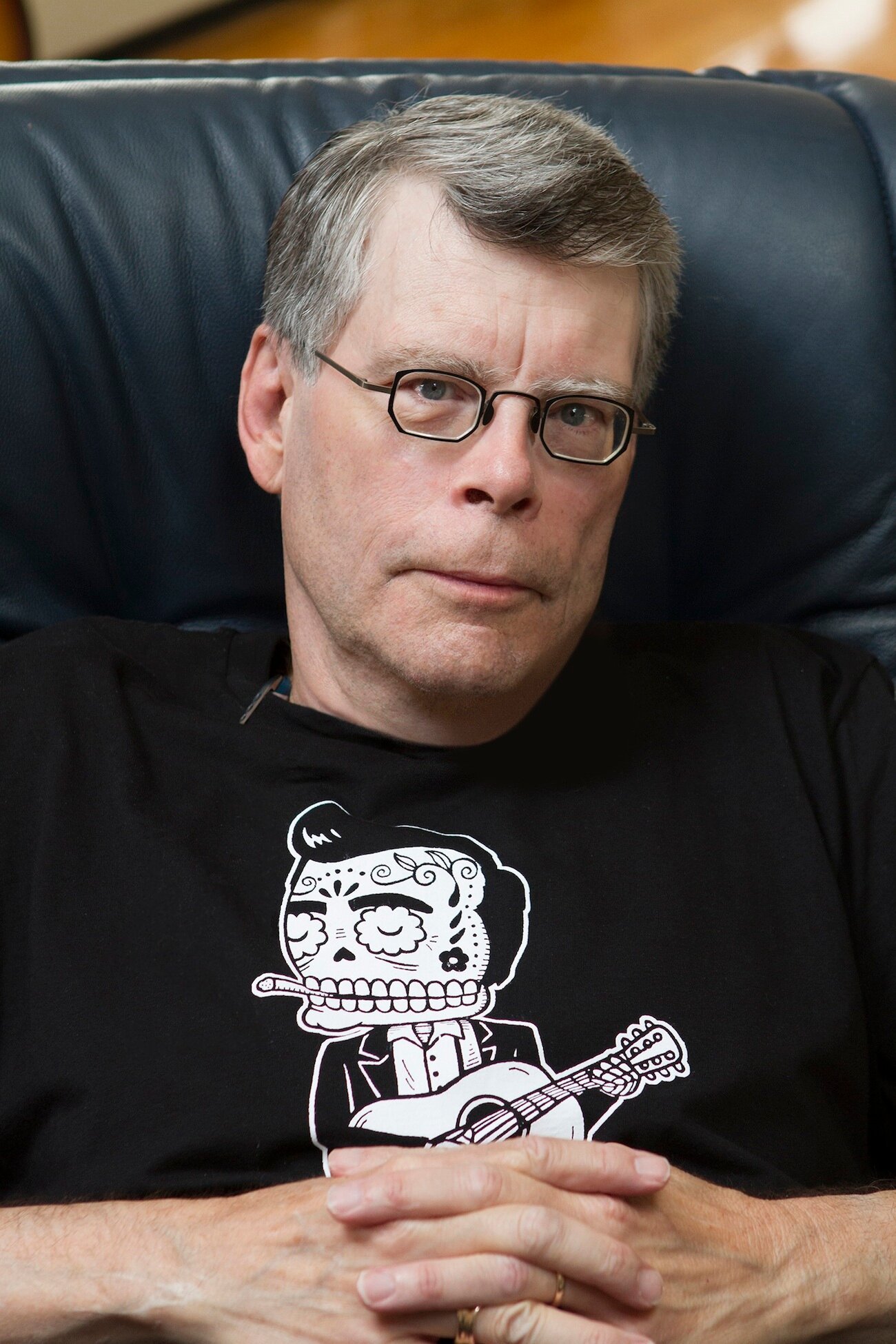
As always, thanks dude.
The first paragraph is about how much of a time bomb a telekinetic person can be. The second paragraph goes, "Of course what none of them knew was that Carrie White was telekinetic."
I laughed my ass off. My main character had been unsure of his gifts at the start of my book, and that meant my readers were unsure, too. Some readers were having trouble figuring it out.
But it doesn't mean characters can't be unsure. It means the author must find a way to make the reader sure. The deeper point is, the premise, and the hint of the dramatic, should be on the table right away. I don't want to write for highbrow people. I want to write for everyone. I'd love highbrow readers to enjoy my work, but I don't see the point of writing work designed to make self-congratulating, Oxford-cloth twits think I'm clever. The point of art is to impact upon people, as such, the amount of people it reaches is vital. Art happens every time someone listens to music, or reads a book, or plays a poignant video game. Art isn't simply in the artist. It's a gift from the artist, and a gift is just a colourful box until it's unwrapped.
Now, as it's necessary to post on Pinterest, I'll honour him with a picture.
As always, thanks dude.
04 January, 2015
Life Coaching for Writers
You guessed it from the title. I saw a life coach. Sort of. You see, my martial arts teacher got a qualification in life coaching and wanted to help me out, so I got a few sessions for free.
One interesting thing we discussed: Imagine I'm a drone working in a company, and my boss wants to make money out of me. What would I, the boss, say to the guy sitting in the cubicle?
First, I'd obviously give him his own office, a booze cabinet and a snack bar. All those perks. Obviously.
But second, I'd send him on a training course. I've said it before and I'll say it again: I need to work on my plotting. I'm not the first author who had trouble learning how to plot. The list includes Roald Dahl, William Shakespeare, and various other names you might remember. Basically, it doesn't mean I'll always suck at it. And please, if you're thinking of commenting on that, remember that the earliest published story of a person's is not the first thing they wrote.
I'm sending myself on a six week training course. I've asked my old mentor, Scott Bradfield, for a list of some books he thinks are particularly awesomely plotted. I'm also looking at some great books that have some things in common with my own, e.g. Carrie and Matilda.
Six weeks, six books, and six book reviews. I'll post any major revelations here. It forces me to be accountable to myself--again being a boss. I might wind up posting more than once per week, but that'll remain the minimum.
Thanks for reading! Wish me luck!
Pointless Pinterest Pick of the Pics:
One interesting thing we discussed: Imagine I'm a drone working in a company, and my boss wants to make money out of me. What would I, the boss, say to the guy sitting in the cubicle?
First, I'd obviously give him his own office, a booze cabinet and a snack bar. All those perks. Obviously.
But second, I'd send him on a training course. I've said it before and I'll say it again: I need to work on my plotting. I'm not the first author who had trouble learning how to plot. The list includes Roald Dahl, William Shakespeare, and various other names you might remember. Basically, it doesn't mean I'll always suck at it. And please, if you're thinking of commenting on that, remember that the earliest published story of a person's is not the first thing they wrote.
I'm sending myself on a six week training course. I've asked my old mentor, Scott Bradfield, for a list of some books he thinks are particularly awesomely plotted. I'm also looking at some great books that have some things in common with my own, e.g. Carrie and Matilda.
Six weeks, six books, and six book reviews. I'll post any major revelations here. It forces me to be accountable to myself--again being a boss. I might wind up posting more than once per week, but that'll remain the minimum.
Thanks for reading! Wish me luck!
Pointless Pinterest Pick of the Pics:
27 December, 2014
Pathways

There has been a long silence, and I owe you guys an explanation. Essentially, I've been locked in a battle with myself, using every shred of energy and will to climb this particularly steep section of my road. "How dare I," it makes some part of me think, "pretend wisdom and dispense advice? How dare I pretend, even, to deserve an audience?"
Just a little further, and perhaps I'll be able to tell you that I have a book deal, that life has begun. Then, and only then, should I post again.
In a way, that part of me is right.
In another way, it bears the philosophy that my life has not yet started. I deserve better than to feel that way.
I'm sure I'll post about my past at some time or another. I've made the decision to be open about it, but we'll wait until the book is coming out for that. Meanwhile, let's just say I've had a tough road to get here. A very large part of me had hoped that upon getting my agent, my hardships were over. But it was not the end of the road--merely the beginning of another.
Ursula le Guin once wrote that a man's weakness is his vanity. It is not enough for him to simply be. I am not Luke. I am a teacher. I am a writer. I am a martial artist. I am a fiance. But I'd be lying if I said any of that mattered to me, in my darker times, other than writer. And I am not a writer.
If you'll allow me:
"Though I speak with the tongues of men and of angels, and have not money, I am become as a sounding brass, or a tinkling cymbal. And though I have the gift of prophecy, and understand all mysteries, and all knowledge; and though I have all faith, so that I could remove mountains, and have not money, I am nothing. And though I bestow all my goods to feed the poor, and though I give my body to be burned, and have not money, it profiteth me nothing. Money suffereth long, and is kind; money envieth not; money vaunteth not itself, is not puffed up, doth not behave unseemly, seeketh not her own, is not easily provoked, thinketh no evil; rejoiceth not in iniquity, but rejoiceth in the truth; beareth all things, believeth all things, hopeth all things, endureth all things... And now abideth faith, hope, money, these three; but the greatest of all these is money."
George Orwell, Keep the Aspidistra Flying, from I Corinthians XIII (adapted)
We are not defined by what we do. Not in meritocratic Capitalism. Not in a society in which the word "successful", in conversation, translates perfectly to "possessing of money". We are defined by what we conquer.
I have chosen to live outside of that value system, but only insofar as I'll seek my money doing something I love. Until I achieve the "success" necessary to support myself and those who need me, I am not a writer. I am a guy who writes.
If you were to ask me three years ago how I'd feel if I got an agent, I'd have told you that I'd cry tears of joy. I did get an agent. I did cry tears of joy. Yet they were meaningless, for though my heart filled with hope and passion and zest for life, I had not money.
In some ways, I have never felt such emotional strain. My dreams have been dangling just out of reach long enough that, in my darkest moments, I feel like life is taunting me, that I should just turn back, that this is the closest I will ever come.
I wish I could say that were only a small voice in my head. Instead, it's a fire in me that burns every time I think of it, including as I write this.
The end is so close yet so distant. That large, burning part of me thinks I should not write on this blog until I've achieved success. Yet that's absurd. I can't shut out every other form of fulfillment, or indeed every other aspect of my career, simply because I haven't yet attained the ultimate goal. And what is the ultimate goal? When I have this published, will I find satisfaction in that, or will that have to wait until I'm a #1 Best-seller? I must find a different way. What I need in life now is to feel like my book is a series of manageable tasks, a set of steps instead of a meandering, endless journey.
As such, I've made a decision. As a form of accountability to myself, I'm going to write something here every week. It may be an accomplishment, or a fear, something that helped me or stood in my way. Some of my posts will be short. Some of them will be crap. Some will be long and some insightful. Some will be about writing. Others will be about life. Regardless, they'll appear, and I'll keep moving forwards.
This road is long. It feels endless, meandering, at times meaningless. But it can't be meaningless. I can't let myself believe that. I must find ways to make it feel like a collection of shorter journeys. Sometimes, to feel that way, one needs companions.
So, to whoever still reads this, I didn't mean to abandon you. I just wandered off this path. Now I'm asking for your hand, to take you along, to borrow your ears and companionship.
In some ways, this may read like a diary for a time. I'm not doing it for you anymore. But perhaps, if we're both lucky, you'll get something out of me.
01 November, 2014
30 October, 2014
Description and the Learning Curve

First off, what's the "learning curve"? I've nicked this phrase from Brandon Sanderson, so I'll tell you what it is to him. It's your readers learning about your world. It is highly prevalent in speculative genres for pretty obvious reasons. We're entering a new world.
The learning curve can equally refer to the process of your reader really knowing what's going on in the plot. That's a highly related issue, so I'll touch on it.
I was watching one of Brandon Sanderson's many awesome lectures on Write About Dragons, when he asked the class why we should write with short, sharp description. Credit to the class: they touched on it. All the same, I wanted to scream through the computer screen at them, which I why I'm screaming at them through a blog post now.
We do it because the reader wants the story. Simple as that. They want to know what the smeg is going on. "Matt jumped over the wall." That tells us what Matt's doing. We' know there's a wall there, we know he's jumped over it, and we know, by strong implication, next time we see him he'll be on the other side of it. Great. The rest is shading.
Shading is great. So long as you don't consistently resort to adverbs and adjectives. "Matt swiftly bounded over the abundantly tall wall of stone that was built in 1946 when German settlers came to Townsville on boats made of oak trees, which were a common tree in Germany back then, hence being used to create the many boats that the settlers, one of whom was Matt's great great great great grandfather, used in coming over the Atlantic ocean, which is the world's second largest ocean and" AAAAAAAAAAAAAAAAHHHHHHHHHCKKKKKKKKK!!
That's the ultimate way of doing it badly. We've got pointless adjectives, we've got useless information, we've got more useless information that stacked upon the first stuff.
So what do I mean by shading, and how can one do it well? The biggest problem above is that I told you all about the wall. It didn't have anything to do with the story. "Matt shifted his weight to the crutch, swung his bad leg onto the wall's edge, and cried out as the bullet wound stung afresh." That's not amazing. It's off the top of my head. But you get the point. The fact that Matt's using crutches, and that he's got a duff leg because he's just been shot, has to do with the story. I shaded his act of jumping in ways the reader might find interesting.
So again, what's the point? The reader wants to follow your character through your story. They don't want you leading them off somewhere pointless.
How's that relate to the learning curve?
That's the other thing Brandon Sanderson was talking about, and he mentioned how people so often in Mid-grade fiction begin in our own world. Why is that? Why does that solve the problem of the learning curve? (The problem being that, given that the reader must understand a new place with new rules, it's very easy to muddle the story. It's also a wonderful thing. It just raises certain issues that must be addressed.) The class touched on it, again to their credit, pointing to the way you get to enter it gently and so forth. They missed the point, though, which ties to how we want to follow the character through the story.
In those books, the learning curve is an inherently vital element of the character's journey through the story. Frequently (Peter Pan, Narnia, Alice Through the Looking Glass and many others) the learning curve, an a legitimate sense, IS the story. We have instant fascination with the things we're going to learn for the exact same reason that readers don't want meandering description: readers want to follow a character through a story. That's why we read.
27 October, 2014
Kickstarter Project: Awesome TV Show
Dear readers,
One of my best friends, a brilliant comedian and performer, Steve Wilson, has begun a Kickstarter project to fund a television show.
Let me tell you something about Steve. He's a friend from High School, and our school had a special gift that few are lucky enough to have: a world-class class clown. He could ruin any lesson. Even the most dour, boring teacher could be brought to his knees by a couple of well-timed words from Steve. If he wanted to make the class laugh, he made us laugh, every time. I remember going to a Bill Bailey gig with Steve, and Steve dared to heckle. Bill stopped everything, bent double laughing, and in reply just told him he was a funny kid. That was Steve at sixteen years old. Everyone knew he could grow up to be a comedian if he wanted.
He's had many hilarious advertisements made (you know the ones that make you laugh instead of throw a shoe at the television, like virtually all other advertisements?), two best-selling circus DVDs, two award winning short films and many other side-projects I won't go into. He deserves even more success than he has.
Steve is awesome at what he does, and if he says something's funny, it's hilarious. I have absolute faith in the show he's about to create, and I'd like to share the Kickstarter page with all of you.
If you trust me on this, and you like awesome comedy, think about donating a small amount to help the Nelson TV industry. Just click the link below.
https://www.kickstarter.com/projects/b-rabbit/b-rabbit-tv-comedy-pilot
06 October, 2014
Write Where it Hurts, or Feels Good. Whatever.
Most writers say to write what you love to read. I say that's very very true, and especially important to new writers, but by going a layer deeper we can understand something about the creative self.
Write what you feel most passionate about. The type of books that have stayed with you the longest, that have really shaped who you are as a person, that have given you dreams and nightmares--those are things worth writing about.
For me, I love reading fantasy fiction, and elements of fantasy will certainly be present in almost all my work. I like science fiction, but usually only love it when it starts to border on fantasy (when it doesn't work to adhere to stringent scientific rules or plausibility). No one can read my stories without seeing my love for fantasy.
The stories I have enjoyed most in my life have been Robert E. Howard's Conan stories. These are grossly underestimated. Bob Howard was a brilliant man, and his intelligence shines through in these stories in his passion for ancient times, the folly of civilization, and the evil of religion. Whether or not you agree with his anti-theist themes, they are ever-present and powerful.
I've probably read A Spell for Chameleon by Piers Anthony twelve times. That's the first book that got me into reading.
But what's the first book that changed my life? A Catcher in the Rye. I read it very young, and it made the whole world make sense. Holden Caulfield made me feel like I wasn't alone, and that other people too saw the way society changes people too easily, how shallowness is lofted as a virtue, and how too many people choose not to notice the problems of the world around them. I am certain that if Holden had been at my school, we would have been friends, and would have listened to Nirvana together. He would have been just as big a fan as I. Things like Nirvana, and A Catcher in the Rye, proved to me that art could really change people, and criticize the world in intelligent ways. That's what made me want to be an artist.
The books that have impacted upon me the most are the aforementioned, 1984, All Quiet on the Western Front, Lord of the Flies, Heart of Darkness, Fight Club, Fahrenheit 451, Brave New World, To Kill a Mockingbird, Of Mice and Men, a small selection of Conan stories, and A Clockwork Orange. It's a short list. Those aren't the only books I love (indeed, my favourite genre only crops up once) but they're the ones I truly wish I'd written. And what could inspire my work more than that?
I was also very inspired by two poems in particular: Always Comes Evening by Robert E. Howard, and The Phoenix and the Turtle by William Shakespeare.
If you're a writer, you'll probably have a list like this. It doesn't matter what's on the list, and if it is populated by the genre you enjoy reading the most, then that's great. If anything, you'll probably have an easier time finding story ideas. Nothing wrong with that. All I'm suggesting here is a different way of deciding what you should write about. It's not what you love, it's a question of who you are, and the answer to that rests with what has impacted upon you the most. The goal of narrative, after all, is to impact upon others.
Now, one needs pictures to stick things on Pinterest, so this one represents something that to me both hurts and feels good. There's beauty to me in the idea of nature growing over the remnants of high civilization, but there's also sadness and horror in it. So this one's for Pinterest, and I guess for me:

(I must note that I in no way believe this sort of writing, this desire to change things, is any better than writing for enjoyment. It is merely a question of knowing who you are and being honest with yourself. If what you love are fun stories, for instance, if that's what made you want to be a writer, you'll probably be really good at writing fun stories, and the world needs fun stories just as much as it needs sombre, gritty things. What I love are dark, gritty stories. That's the only reason I want to write them. It is not because I think my goals are any more important or worthwhile. I have to say this because too many authors use words like "serious fiction", and draw a distinction between "literary" and "popular". Such distinctions disgust me, and I have to make it perfectly clear that I am not one of these pretentious douche-bags.)
Write what you feel most passionate about. The type of books that have stayed with you the longest, that have really shaped who you are as a person, that have given you dreams and nightmares--those are things worth writing about.
For me, I love reading fantasy fiction, and elements of fantasy will certainly be present in almost all my work. I like science fiction, but usually only love it when it starts to border on fantasy (when it doesn't work to adhere to stringent scientific rules or plausibility). No one can read my stories without seeing my love for fantasy.
The stories I have enjoyed most in my life have been Robert E. Howard's Conan stories. These are grossly underestimated. Bob Howard was a brilliant man, and his intelligence shines through in these stories in his passion for ancient times, the folly of civilization, and the evil of religion. Whether or not you agree with his anti-theist themes, they are ever-present and powerful.
I've probably read A Spell for Chameleon by Piers Anthony twelve times. That's the first book that got me into reading.
But what's the first book that changed my life? A Catcher in the Rye. I read it very young, and it made the whole world make sense. Holden Caulfield made me feel like I wasn't alone, and that other people too saw the way society changes people too easily, how shallowness is lofted as a virtue, and how too many people choose not to notice the problems of the world around them. I am certain that if Holden had been at my school, we would have been friends, and would have listened to Nirvana together. He would have been just as big a fan as I. Things like Nirvana, and A Catcher in the Rye, proved to me that art could really change people, and criticize the world in intelligent ways. That's what made me want to be an artist.
The books that have impacted upon me the most are the aforementioned, 1984, All Quiet on the Western Front, Lord of the Flies, Heart of Darkness, Fight Club, Fahrenheit 451, Brave New World, To Kill a Mockingbird, Of Mice and Men, a small selection of Conan stories, and A Clockwork Orange. It's a short list. Those aren't the only books I love (indeed, my favourite genre only crops up once) but they're the ones I truly wish I'd written. And what could inspire my work more than that?
I was also very inspired by two poems in particular: Always Comes Evening by Robert E. Howard, and The Phoenix and the Turtle by William Shakespeare.
If you're a writer, you'll probably have a list like this. It doesn't matter what's on the list, and if it is populated by the genre you enjoy reading the most, then that's great. If anything, you'll probably have an easier time finding story ideas. Nothing wrong with that. All I'm suggesting here is a different way of deciding what you should write about. It's not what you love, it's a question of who you are, and the answer to that rests with what has impacted upon you the most. The goal of narrative, after all, is to impact upon others.
Now, one needs pictures to stick things on Pinterest, so this one represents something that to me both hurts and feels good. There's beauty to me in the idea of nature growing over the remnants of high civilization, but there's also sadness and horror in it. So this one's for Pinterest, and I guess for me:
(I must note that I in no way believe this sort of writing, this desire to change things, is any better than writing for enjoyment. It is merely a question of knowing who you are and being honest with yourself. If what you love are fun stories, for instance, if that's what made you want to be a writer, you'll probably be really good at writing fun stories, and the world needs fun stories just as much as it needs sombre, gritty things. What I love are dark, gritty stories. That's the only reason I want to write them. It is not because I think my goals are any more important or worthwhile. I have to say this because too many authors use words like "serious fiction", and draw a distinction between "literary" and "popular". Such distinctions disgust me, and I have to make it perfectly clear that I am not one of these pretentious douche-bags.)
18 August, 2014
Suicide and Sorrow, some words for Robin Williams
I wish this post were an ode to him. He deserves one, but I'll leave those to people who knew him better--both him and his work. I must stick to what I know, and speak about depression in general, and defend those who have taken heat from displaying their understanding. People are naturally sensitive now, and I've seen some arguments arise as to the nature of what happened to him, and I hope to draw a firm line under it now so that we may cast it aside. This is not the time for bickering, but it is an opportunity to attain some understanding of depression and how we might learn to overcome it, or help those we love when they are in need.
I write this out of respect for him. I must make that clear. Because next I'll talk about what happened to him, and how depression is far more than a chemical imbalance in the brain. This must be understood if we are to respect his memory and the way he died.
Allow me to make some things clear:
1) I know depression is a chemical imbalance in the brain.
2) I've suffered from it.
3) I know that the aforementioned imbalance is made far worse by drugs, especially those that have lasting effects on brain chemistry even when taken in small quantities.
It occurs to me that our devotion to the idea that depression is a mere question of chemicals stems from a lack of empathy. If we can't believe suicide springs from the heart, is that because we feel the need to judge it?
The amount of dumb kids I've heard talk about how Kurt Cobain was just a junkie who blew his brains out leaving a wife and daughter behind, so screw him, makes my head spin. That's a disgusting attitude towards suicide, and it seems the only way we can make sense of it is to say, "Well, he had no choice." Otherwise we think he must be a horrid, selfish weakling.
Again, that's disgusting. We need to understand that we have no right to judge another person before walking a mile in their shoes.
Robin Williams suffered, and if you understand his suffering, you'll know that you cannot sweep it aside with a simplistic explanation. Nor should you, and nor do you need to. A person who commits suicide deserves your empathy, your EMOTIONAL understanding, not your Wikipedia knowledge about chemical imbalances, and certainly not disdain.
If you could speak with him, if you were his friend, would you stop at telling him, "There there, it's just chemical imbalances. Just don't dwell on it." Is that really all you'd say? I would have started by asking him what was wrong, encouraging him to share his feelings (his FEELINGS, not his knowledge of chemical imbalances) with me, then began the long process of convincing him, by speaking on his own terms, how life was worth living. Because it is, and chemicals don't make it worth living. Joy does. And the great secret that's hard to see is, joy is found everywhere. It's dancing in your face at every moment in life. You just, sometimes, grow blind to it.
Chemicals can help you grow blind, but they can't work alone. And telling him all about chemicals would certainly not be speaking to him on his own terms. That would have made him feel that you didn't even care to understand, and he would have been right.
I hear a great deal of crap about depression and suicide, even from friends and family. I tell them it's more than a neurological disease, and they don't believe me. Well, I've been clinically depressed. I've even deeply contemplated suicide. I've lived in more than one therapeutic hospital. All this was while I was a child. My late childhood was a well of nightmares, and I know for a fact that clinical depression comes from (or with, and there's no difference) a perspective on life and, because they're created by joy and sorrow, by dreams and nightmares, perspectives can be changed. Otherwise, why bother communicating? Moreover, what do you think my reaction was when people told me the nightmares were all in my head?
The fact is, though most people are too self-righteous to cognate it, that to brush Robin Williams's problem off as a chemical imbalance is an insult to him, and an insult to all depressed people.
I've mortally offended people by speaking the truth about depression, too. I once had a person physically attack me (and not successfully, I must add for reasons of pride) because I said attempted suicide is almost always a cry for help. I've probably met over a hundred kids who have attempted suicide, and they all confided in me something they would never admit to an adult: it was a cry for help. It's not hard to kill yourself if you truly want to. Actual suicide is a decision to end life, not to cry out to those you love. There is a big difference, but there's also a big similarity along the road, and it's found in a person's inability to see the love and compassion and joy around them, and it's well beyond the chemical.
You'll see what this stuff really looks like amongst teenagers in my book. Know that I've been told a few times that it's not realistic, and I don't know what it's really like in those hospitals et cetera. Well, I've lived in those hospitals. I was one of those kids. I know exactly what it looks like, what it feels like, and I also know most people don't have a clue what it's like to be depressed, suicidal or truly isolated. The reality isn't pretty, it isn't simple or easy to explain, and it isn't purely sentimental either. I hope you can accept that, and I hope I've helped you see that depression is not something to brush aside as a chemical imbalance. It is a disease of the HEART, the SOUL, and the MIND, not the blood stream.
The essence of my point is, chemicals didn't kill Robin Williams. Sorrow did. And it's the sorrow that must be understood. If I didn't believe that, I'd be in the pharmaceutical industry, but drugs don't solve the problem. They just push it aside long enough to be dealt with. Communication and understanding and regaining the ability, that we are all born with, to see that joy, is what solves the problem, and I would urge anyone who feels depressed or contemplates suicide to heed those words. Joy is all around you. Take your medication, but don't expect it to fix everything, and don't despair if it doesn't work. It's a nudge in the right direction, not the end of the path, and it's a path worth walking, and there are helping hands all around you if you trust enough to look.
As for the rest of you, become a helping hand, listen to people who are depressed and become one of the myriad hands that deserve to line the path they'll walk to happiness. To accomplish this, look, see, listen and hear, and understand that depression is a fraught journey not to be brushed aside.
Subscribe to:
Posts (Atom)