It's been a very long time, but here's why:
www.black-cat-entertainment.co.uk
That's me now. That's my company, the team I built from the ground up. I love making games, and to my initial shock, I love business. Despite its reputation as being cut-throat and bastardly, it's actually all about relationships and mutual benefit. Best of all, in entertainment, success is all about making something amazing in a team of likeminded, awesome people.
The days of working alone are nearly gone. No longer will a stranger ask me at a bus stop for the time, only to have me blurt out my life story inside of 5 minutes because they're the first person I've spoken to in ages. I now have whole teams to work with, and I love every minute of it.
I'll be creating a company blog what will be 99% written by me, and I'll be posting updates here.
If anybody still reads this, it's my hope that some of you will join me on the adventure into games. I'll still be expressing myself through art, just in a different medium. Likewise, while I'm transfering most of my efforts from books to games for the time being, it's still all about learning to make it as an artist.
Showing posts with label Industry. Show all posts
Showing posts with label Industry. Show all posts
22 February, 2020

05 January, 2016
Ring in the New Year
The long blog hiatus was this time for a very good reason, and I stand by it.
I recently had the biggest punch in the stomach of my career. I finished Forget Me Not, was told it was very good, but that it wasn't marketable in the slightest. Tragedies don't sell, according to many so-called "experts". I say those "experts" are incredibly out of touch with young people today. I say Emo and Goth music wouldn't exist if young people weren't capable of appreciating deep feelings, or indeed enjoying art designed to explore melancholy. Those particular styles in that particular art are just two of a myriad examples. In fact, as a person who wants to write for young people, I find the idea that they're incapable of appreciating tragedy quite offensive.
But I'm not delusional. It's true that tragedies are, on the whole, one of the least lucrative (if not the very least) kinds of stories. I believe Forget Me Not will be one for the future, for the critics. These days, publishers aren't interested in anything by a new author unless they think it's a guaranteed hit. That's why there's so much shallow trash out there in the YA market. There's some great stuff too, but something's wrong when the really great writers have a tougher time getting started than the ones who want to crank out some generic "Heroic young person takes on evil grown-ups and wins" story. I don't want to write that crap. I always hated reading that crap, too.
After getting my feedback about Forget Me Not, I felt lost. I'd spent so much time believing that good books will out, that craft is the most important thing, that ideas are cheap and it's all about execution, and that gripping and beautiful stories would, if they're well told enough, get published. It turns out I'm working in an industry that never would have published Catcher in the Rye, for instance. How would you pitch that one to an agent? What's the synopsis? "Jaded teenager wanders around New York for a weekend." Doesn't sound like a rain-maker to me, and yet every agent who would scoff at that synopsis (i.e. all of them) would be dead wrong. Even if Catcher in the Rye isn't your thing, I can think of dozens of mega-best-sellers with an equally boring synopsis.
I was lost, and down, and had to pick myself up again, and I didn't know how. I was very close to giving up on the whole thing. If it's not about good fiction, what's it about? What's the point?
That's how I felt, and I didn't want my bitterness to spill over into my blog. I couldn't write anything without seeming bitter, because I was bitter, but I think, actually, this has been my greatest lesson, and I hope it's my final hurdle.
Every NEW writer I've ever known has pinned all their hopes and dreams on every work they've produced. This is difficult, because most of their early work isn't very good, any more than a pianist's first attempts at playing a tune. It's practise. It was difficult anew when I wrote something that I KNEW was good. Industry experts TOLD me it was good. I was RIGHT, and yet I still hadn't achieved a thing.
Now, I just don't care anymore. I'm broken. It's only after we've lost everything that we're free to do anything, as Tyler Durden said. And it's when we're broken that we can most easily forge ourselves anew.
Now I just feel like I'm writing books. I'm pretty prolific. I'm making plenty of money in my day job (or, enough to survive, anyway) and I'll write one my agent thinks could be a rainmaker eventually. I'm focusing on "cool factor" as much as depth or meaning. I think it's entirely possible to achieve both, and I'll admit Forget Me Not was light on "coolness" as one of the emotional effects. It was a tragedy through and through. I have a handy writer's group that I started in Leamington Spa where I live. Every time I show them my work I ask whether they felt what was happening was cool. I'm going to write something with cool factor eventually, and I refuse to give up on my ambition of creating work of social, moral and emotional significance. I strongly believe one can achieve both, and I'd be far from the first to do so. I'm still at it, about 8,000 words into another book, fully plotted, and now that I've taken my hard-earned Christmas break, I'm still writing every day.
Every knock-back I receive, I learn a little more the importance of what Karen Blixen said: "Write a little every day, without hope, without despair."
I won't forget Forget Me Not, but I'll learn, and I'll grow. There's no such thing as failure. There's just trying and giving up.

I recently had the biggest punch in the stomach of my career. I finished Forget Me Not, was told it was very good, but that it wasn't marketable in the slightest. Tragedies don't sell, according to many so-called "experts". I say those "experts" are incredibly out of touch with young people today. I say Emo and Goth music wouldn't exist if young people weren't capable of appreciating deep feelings, or indeed enjoying art designed to explore melancholy. Those particular styles in that particular art are just two of a myriad examples. In fact, as a person who wants to write for young people, I find the idea that they're incapable of appreciating tragedy quite offensive.
But I'm not delusional. It's true that tragedies are, on the whole, one of the least lucrative (if not the very least) kinds of stories. I believe Forget Me Not will be one for the future, for the critics. These days, publishers aren't interested in anything by a new author unless they think it's a guaranteed hit. That's why there's so much shallow trash out there in the YA market. There's some great stuff too, but something's wrong when the really great writers have a tougher time getting started than the ones who want to crank out some generic "Heroic young person takes on evil grown-ups and wins" story. I don't want to write that crap. I always hated reading that crap, too.
After getting my feedback about Forget Me Not, I felt lost. I'd spent so much time believing that good books will out, that craft is the most important thing, that ideas are cheap and it's all about execution, and that gripping and beautiful stories would, if they're well told enough, get published. It turns out I'm working in an industry that never would have published Catcher in the Rye, for instance. How would you pitch that one to an agent? What's the synopsis? "Jaded teenager wanders around New York for a weekend." Doesn't sound like a rain-maker to me, and yet every agent who would scoff at that synopsis (i.e. all of them) would be dead wrong. Even if Catcher in the Rye isn't your thing, I can think of dozens of mega-best-sellers with an equally boring synopsis.
I was lost, and down, and had to pick myself up again, and I didn't know how. I was very close to giving up on the whole thing. If it's not about good fiction, what's it about? What's the point?
That's how I felt, and I didn't want my bitterness to spill over into my blog. I couldn't write anything without seeming bitter, because I was bitter, but I think, actually, this has been my greatest lesson, and I hope it's my final hurdle.
Every NEW writer I've ever known has pinned all their hopes and dreams on every work they've produced. This is difficult, because most of their early work isn't very good, any more than a pianist's first attempts at playing a tune. It's practise. It was difficult anew when I wrote something that I KNEW was good. Industry experts TOLD me it was good. I was RIGHT, and yet I still hadn't achieved a thing.
Now, I just don't care anymore. I'm broken. It's only after we've lost everything that we're free to do anything, as Tyler Durden said. And it's when we're broken that we can most easily forge ourselves anew.
Now I just feel like I'm writing books. I'm pretty prolific. I'm making plenty of money in my day job (or, enough to survive, anyway) and I'll write one my agent thinks could be a rainmaker eventually. I'm focusing on "cool factor" as much as depth or meaning. I think it's entirely possible to achieve both, and I'll admit Forget Me Not was light on "coolness" as one of the emotional effects. It was a tragedy through and through. I have a handy writer's group that I started in Leamington Spa where I live. Every time I show them my work I ask whether they felt what was happening was cool. I'm going to write something with cool factor eventually, and I refuse to give up on my ambition of creating work of social, moral and emotional significance. I strongly believe one can achieve both, and I'd be far from the first to do so. I'm still at it, about 8,000 words into another book, fully plotted, and now that I've taken my hard-earned Christmas break, I'm still writing every day.
Every knock-back I receive, I learn a little more the importance of what Karen Blixen said: "Write a little every day, without hope, without despair."
I won't forget Forget Me Not, but I'll learn, and I'll grow. There's no such thing as failure. There's just trying and giving up.
17 August, 2013
The Alliance of Independent Authors
Most of you will not be in England, let alone near Stratford upon Avon, but regardless of whether you attend the event, these guys have plenty of online appeal. Whether you want to self-publish or not, anything that helps you network, improves your marketing skills and helps you understand any side/element/method of the industry is a great thing. I'm proud that ALLi wants to advertise on my site, and I highly recommend them.
 Writers these days have so much choice. The traditional option of getting an agent and a publisher (if your work is good and you’re lucky) is not the only way anymore. There’s self-publishing.
The work also needs to:

Why attend?
Take control of your (writing) life

Why choose this?
· More control. For example, over content and cover
· Your work is available to the reader faster (books travelling the traditional route can take as long as a year to be published)
· Depending on how you outsource the work, the costs you incur may be fixed, as opposed to a percentage of your earnings
Whether self-published or traditionally published your work should be good, i.e.:
· captivating story
· fascinating characters
· page-turning plot
· clarity of writing
· be very well edited (over and over)
· have hardly any typos (professionally proofread)
· have a first-class cover
With an agent and publisher, you have some help with the last three points, and also some initial help with the promotional effort. When you’re self-published, you’re on your own. Or are you? Enter, ALLi. http://allianceindependentauthors.org
ALLi is the Alliance of Independent Authors, an online network of hundreds of people in various countries across the world. Members are involved in self-publishing, either as authors or author service providers. There’s also student/associate membership. ALLi has a vibrant member community on social media, providing advice, feedback, support and information on all aspects of self-publishing. It’s also a great way to network with people. As well as platforms such as Facebook and Goodreads, there’s also an ALLi self-publishing blog, and the chance to promote your work online, as part of your member organisation. So far so good.
But sometimes it’s good to meet in person.
So ALLi in the UK (Midlands) is inviting all authors, published, self-published and seeking to be published to attend our first meeting on 14 September.

Why attend?
- For writers at all stages including those who have or are considering self-publishing
- An opportunity to meet fellow writers, network and share ideas
- Discuss issues, tell others about your work and find out more about ALLi, the Alliance of Independent Authors, a rapidly growing organisation with hundreds of members on six continents
Where: Dirty Duck Pub (also known as The Black Swan), Waterside, Stratford-upon-Avon CV37 6BA (future venues may vary) https://www.oldenglishinns.co.uk/our-locations/the-dirty-duck-stratford-upon-avon
When: Saturday 14 September at 11 am
Location: the pub is very near the centre of town and just a few hundred yards from the RSC Theatre on Waterside
Attend the meeting and enjoy a visit to the lovely town of Stratford-upon-Avon, home of Shakespeare and Marie Corelli.
The meeting is FREE, and all writers are warmly invited, but please let us know if you’re going to attend.
Contact: allim@headweb.co.uk
Bren Littlewood
Ellie Stevenson
Image Source: http://commons.wikimedia.org/wiki/File:FI_bookstore.JPG

11 August, 2013
Why Write-a-thons are Awesome
Note: they're also bull.
Amazingly, this grand paradox actually expresses in itself why they're awesome. Read on.
If you're a speculative fiction writer, you know about Clarion. If not, I've turned the name into a handy link, as well as that link button, and this one.
Another note: This post is posthumous (if my unconscious mind just created that pun, rest assured my conscious mind has told him off). I must apologise. My regular fans will have noticed that I haven't been blogging much for the past month. A lot of bad personal stuff that I won't tell you about has happened, but I've also just been writing really hard core. I'm always pretty hard core, but I desperately want to get a finished product to my agent by the end of this month, and it's going to be a rough ride. I wrote this post two months ago and forgot to hit the "post" button. Sorry. I'm on the ball again, I promise.
Anyway, in my time, I've been skeptical of Clarion for two reasons.
1) A group of established writers selecting proteges based in part on the perceived quality of their ideas will create an inevitable bias towards established tropes. It seems reasonable that the ideas highly regarded by the establishment (thus the established writers) are, at any given point in history, inevitably already established.
I've come to think something else. So long as established writers are actively seeking originality, this won't necessarily be the case. Thus it will only sometimes be the case, which leaves it, in my opinion, in the category of valid concerns.
I have serious trouble trusting authority. The more I've learned about art, life, academia and society the more I've become proud of that fact. It isn't that I'll never trust an authority figure. It's that my first instinct is, "Watch this person closely. I must choose whether or not to trust them on the basis of their own virtues, not on their being an authority."
2) You can't become a better writer in a couple of months (or however long it is). Now, in a sense, you become a better writer every day. And there will be the occasional leap in understanding, and it will take place in a small time frame, but they will be far apart. It takes years to learn the craft and years to find your own style and purpose within the art. It's ridiculous to think that after eight weeks (or however long it is) of study a person will go from un-publishable to professional.
What a good teacher can give you is a plethora of tools to carry forward into your own learning process. If any of you decide to study an MFA in Creative Writing (or MA or MSt--whatever) if your teacher says that by the end of the year you'll have a publishable novel, they're probably a bad teacher. It take a long, long time to become a writer.
Here's the good news. Some of you might be worrying that you'll spend years of your life slaving over this amazing craft that you love. You'll write a million words and five books that never sell and you'll read voraciously and just after your husband/wife leaves you and your bank balance runs dry and your roof caves in on your computer and you can't afford a new one of either, you'll still fail. Do you know how many people that happens to, or has ever happened to?
NONE!!!!
No one will ever slave over the craft to fail at it! Never in your life will you meet a person who has honestly given something the best they've got and failed to achieve at least some measure of success at it. A person who wants to be UFC Champion might never make it, might never even fight in the octagon, but they'll sure as hell be a damn fine martial artist, able to teach it professionally, if they put in over four hours per day of solid training between the ages of 16 and 26. Same with everything. A person might never compete in the Olympics but they'll wind up a damn good swimmer, or whatever.
Every writing tutor worth their meat knows that the VAST majority of people they teach won't ever succeed in writing! Why? They're not going to keep at it! Yet a shocking number of Clarion students do succeed. Why the smeg is that?

1) They learn the atmosphere of creativity. This is something you can get on an MFA, but you have to do it yourself. On my MFA, a group of four people became fast friends, meeting twice per week to talk about creative writing and once per week to critique each other's work. This was purely extracurricular, but it meant writing became our whole lives. Two of those people have gone on retaining equal focus. One of those is me, the other is my fiance. We still edit each other's work. One of those people now works as an editor at the Lagoon Group and one of them now works in advertising. That's three out of four in the literary industry.
Nikole, Ruth and I are the only three people on the MFA to carry our writing aspirations into the future. That's three out of twelve, and all three came from a group of people who made writing the chief characteristic of their SOCIAL lives. That's what Clarion does. Students work together. They constantly think and talk about creative writing, and they make close friends (or nemeses, who can be equally helpful) to encourage them to keep trying their best well after the event.
2) You also get this on an MFA, but only if your supervisor(s) like you. I was fortunate enough for this to be the case with Scott and Paul. Through being around real writers, we get a sense of how they work, who they are and how they approach not just the tasks of craft, but of life. Through a human relationship we come to understand on an emotional level that authors are human beings.
3) Clarion students will be inundated with the knowledge that will carry them forwards into their writing education, which will in vast part happen alone. You might think this should be number one, but we're talking about Clarion here as distinct from other writing courses. Clarion is a fast paced, pound you in the head kind of experience. It's possible on an MFA to do the bare minimum intellectually and emotionally. Even someone who gets a good grade can detach themselves most of the time, letting life into the foreground while you're trying to learn. In acquiring these tools, you are trying to completely alter your creative perspective. Again, unless you are a rare exception, you will not be able to use them right away. But if you do your MFA right, you will never be the same after it. That, too, is what Clarion does. It shoves people into an atmosphere in which they can't avoid making the craft their entire life, having craft technique, creative and personal-life perspective crammed into their brains. Even in a short space of time, after Clarion a writer will never be the same.
4) This last inevitability must be mentioned. People will bitch about this, and probably some readers will, in the first half of this paragraph, think that I'm bitching too. This happens when you do an MA (or MFA or MSt) as well, but to a lesser degree. You will have met a great deal of professional, successful, well connected authors. What you further get at Clarion is a large clique of distinguished alumni, and a serious accolade. These aren't bad things. I don't care if you think they're unfair. It's irrelevant. If you bumped into Stephen King and he told you he liked "the cut of your gib" (or however he expresses himself) and wanted to help you into the industry, would you tell him "That's not fair! Go to hell!" If the answer is yes, you don't take your aspirations very seriously. The fact is, people have to work their asses off to get into Clarion, and if they get a head start in their career as a result, which they most certainly do, good for them. They've earned it.
So why are Write-a-thon-s great? They get people encouraged by the existence of Clarion! I've already established above that the SOCIAL atmosphere of education is by far the most important thing. That's what's happening here. If we all get excited about Clarion, share ideas and take interest in each other's work, we're actually doing the most important thing about going to Clarion without even being there. So let's get excited.
Why are they bullshit? Don't let anyone tell you how much, when or what you should write. Find a system that works for you, that you can get excited about, and make the most of it. Anyone who offers established rules about how to go about Write-a-thon-ing doesn't know a smegging thing about the creative process. The important thing is just to get cracking and have fun.
Initially, when I'd written this post, I'd said this: "If I were doing this right I'd offer excerpts of my work every couple of days. Well, that's not how my creative process works right now. Plotting a novel requires smeg-loads of thinking, and most of my work is done by pen on a sheet of paper and has arrows drawn all over it. Scanning and posting my rambling diagrams will not engage the interest of most people."
Now, back in the present, I can't post excerpts anyway, but my point still stands. Perhaps next year I'll set aside the time to write short fiction and post as I go.
Regardless, whatever helps you, do it! My purpose in any given a-thon is to encourage my readers to have fun and forge a productive social network.
19 June, 2013
Standard Manuscript Format Doesn't Even Require Linguistic Evolution

Anyway, what you need is knowledge of how to submit your story to a publisher, magazine editor or literary agent.
Standard manuscript format (SMF) exists for everyone's benefit. It's simple, straightforward and known by every professional in the industry.
But our story does not end with the universal, because neither do submission guidelines. A minority of editors ask for their own specific pet peeves to be satiated, often because they find a particular format easier to read on screen, and sometimes simply in some diva-like bid for satisfaction of a power fetish. But we don't want to express annoyance with these people. We want them to fall in love with us and our work.
What I outline below is STANDARD practise. That means two things:
1) Always read the specific guidelines. If nothing else, you'll get some sense of the magazine, and you want to know if editors have their own specifications.
2) If they don't specify, send them SMF. If they don't like it, screw them.
I have met psychotic diva editors who not only have their own pet peeves, but will not inform writers of them. Don't worry about them. Everyone who's anyone agrees that these idiots don't deserve to exist. Interestingly, all the diva editors I know wanted to be authors back before they gave up. It's an issue of grudges. If any of my relevant acquaintances are reading this, they know who I'm talking about. What's the emoticon for a middle finger? oIoo That will do.
SMF is simple.
12 point font, double spaced, usually Courier New or something else that's mono-spaced (meaning all letters take up the same amount of space) making it easier to detect spelling mistakes. Some like Times New Roman, which isn't mono-spaced. Some like Ariel. Some hate one or the other. Reading all day gives a person very strong (one might say irrationally so) preferences. I'm not certain as to whether the particular mental disorder has been named. I hereby copyright OCFD (Obsessive Compulsive Font Dictator). The nice part is, good OCFD sufferers acknowledge the need to tell you. They understand that they have a problem and they only want to be treated with respect.
Do read the guidelines. I know a guy who hates Courier New font. It fills him with rage. He doesn't know why. But he's a good chap and he's professional enough to tell people on his submissions page. If you submit in Courier, he is not only filled with irrational rage, but he knows the only thing you know about his magazine is the email address.
Back to SMF:
Do not put a double margin between paragraphs.
Indent the first line of all paragraphs in the usual manner. (1.25 is what Microsoft Word does automatically, so that's fine. Other programs do 1.27. Nobody will notice.)
In the top left of Page One, do not indent. Put your real name, address, email, phone number if you like. In the top right put your word count. Often magazines like you to state underneath that whether it's a short story, novelette or novella. Again, they read fast and churn through the slush pile quickly. They want to know what they're getting into.
Do not embellish your title in any way whatsoever. Leave it as plain font, the same size as everything else.

In the top of each page APART FROM THE FIRST should be:
Smith / Town Placeville / [page number]
Note: last name, SHORTENED title (if it's a long one), page number starting with page 2.
I use two spaces after colons and periods. Some writers don't. Some editors hate two spaces. Some hate one space. If they have a strong preference they should tell you or they can go to hell. You've noticed the theme behind this post now, I'm sure. To be clear, I'm not just a ranting writer. I'm stating the opinion of every professional, good, hard-working person in the industry. It's the editor's job to tell you. That is, tell you everything beyond the assumption that you'll know about SMF.
Note how "The Ice Man" did this at the end of his scene:
#
blank space
hash
blank space
Blam! New Scene!
At the end of the story, make it clear. Write
END
There. Simple. This'll not only make you look professional, but it'll make your work not be annoying. Editors are used to this format. They expect it, unless they notify you otherwise. If OCFD sufferers or editors with any other strange compulsion fail to tell you, use SMF secure in the knowledge that they're the ones being unprofessional. You'll have your pro-groove writer clothes on, so to speak, and you'll look more like this:

Any further questions, check out William Shunn's comprehensive article.
Happy (e)mailing.
09 May, 2013
Spank Me

With all this talk of inspiration and toughening up, there's a point that needs to be made.
This is something we all learn from bitter experience.
Let me preface this by saying I got my critique form my agent recently. She said exactly what I'd expected. Lots of constructive comments, a little helpful dialogue over email, and she didn't think the book was perfect. Neither did I. That's why I wanted the comments. I put myself, and all my best efforts, naked before her so she could...
And... SMACK!
"Ow! Damn, lady! If I were into that stuff maybe but--"
"You'll take it. It's good for you. I know you want it."
And... SMACK!
"Give me back my clothes!"
In a (not erotic) sense, the experience reminded me of my martial arts training.
Fear is something very few martial arts teachers acknowledge. If you're well trained, they say, you won't feel it. You'll just fight.
Bull.
Military teachers know that even hard-core special forces guys are quaking in their boots when the action hits. They've just become comfortable with it. That's why good fighters scream like banshees when they're in combat, instead of staying quiet like a Shaolin monk stereotype. You don't enter combat expecting to win. You enter expecting to fight. The most dangerous fighters enter expecting to die.
MARTIAL ARTS RANT
It's vaguely related, but skip it if you aren't interested in martial arts.
This isn't something a person can teach you. It's something I discovered from experience. Once I'd been in 700 or so fights (controlled so we didn't kill each other, but with no rules aside from "let the guy tap out", "stop kicking him once he goes limp" and "don't leave him blind or impotent") I stopped thinking about victory or defeat. I just fought, feeling the combat around me. Only then could I fight well, and martial arts stopped being theory and became practise. In terms of technique, Tukkong Musool is quite simple. That simplicity allows it to be experienced effectively by the student, and the experience, the method of learning via doing, is what separates it from other martial arts. There is no theorisation, only practise. That's why it's used by Special Forces squads all over the world. Even Brazilian Jiu Jitsu teachers feel the need to inundate their students with the idea that all fights go to the floor. Most do (which is why we do BJJ in Tukkong, because it really is the best ground-fighting art) but when fighting multiple opponents, taking someone to the floor is a death sentence. BJJ teachers neglect to explain this incredibly obvious fact. It has to be deliberate, because no one is that stupid. In truth, I've never seen another school that gets you training in practise against multiple opponents, and I've looked extensively. I'll reiterate the reason I say all this: Special Forces units and all of the elite warriors of this world were trained by getting their asses kicked, and there is no substitute.
End of Rant
I can tell you not to fear rejection, to revel in advice and look forward to your agent/editor tearing your manuscript to shreds to help forge it anew, but I'd be like a martial arts teacher telling you not to feel fear. That's smeg. You will be afraid of rejection, and even acceptance that includes extensive criticism will hurt.
When Leslie gave me my feedback on my novel, it tore me up. I was out with friends, having a great time. I checked my email on my phone and had to be alone. I couldn't even tell anyone why because I was so ashamed.
The next morning (in which I write this post) I looked at her email and realised she didn't say she hated the book, she just said the plot digresses a bit and it needs some work. I ALREADY KNEW THAT!!!! I sent it to her expecting her to say those exact smegging things! She even offered the advice I'd hoped for!
If we follow the spanking metaphor, I'd just gone into her office and done this:

I got what I'd asked for. Why did it upset me? Because it hurt. Because emotions are idiots. Much as we love them, they don't submit to logic. (I'm a huge advocate of the importance of emotional intelligence, just to be clear. I mean this stuff tongue in cheek.)
I even new it would hurt. I was emotionally prepared. Still, there was a part of me that wanted her to say the last story she'd fallen so in love with was A Clockwork Orange, and she thought it grand that another talent like Anthony Burgess had joined her agency and she wanted to be my biggest fan for all eternity and she'd send me flowers and love letters and panties and, while I would have been a bit weirded out, I certainly would have taken it as a compliment.
Now I'm hard at work fixing the glitches that I knew were there, inspired by Leslie's words and thankful for her guidance. I repeat: emotions are idiots.
I'm not sure what to offer here by way of advice. I don't think I've truly learned anything, which is to say, I'm not sure this experience will change me much. Maybe I'll become more confident as my career progresses, but I have no way of knowing yet. All I can offer is this: getting spanked hurts, even when you see it coming, and even when it's for your own good. Don't send your manuscripts off expecting them to be loved. Send them off expecting them to be read.
03 May, 2013
Big Business and Modern Publishing
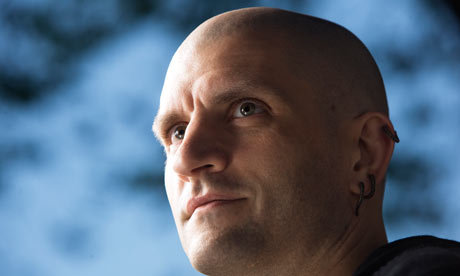
China Miéville: Writers should welcome a future where readers remix our books Novelist says anti-piracy measures mooted for literature are 'disingenuous, hypocritical, ineffectual' and 'artistically philistine'
The link above leads to an (in my opinion) excellent article about the evolution of publishing. I always find China's words fascinating. I think he's one of the foremost intellectuals writing fiction today. I don't always agree with him, but I have never come across an argument of his that I did not think was valid and worthy of debate.
In the spirit of my blog having become about "me and stuff" again (that's a reference to an old post) I thought it high time I post something about publishing in my capacity as a Sociologist.
I think everyone agrees that publishing is changing. I also think fear-mongerers, and hopeful self-publishing writers too often think in terms of the extreme idea that traditional publishing businesses will collapse.
Large businesses need to move slowly when undertaking a vast shift, simply because businesses do not directly control the majority of their money. It's invested. I doubt they will die before the necessary shifts, already being frantically planned and implemented, come into effect.
Did video game companies die when online content became available? No. They thrived.
Did anything bad happen to the record industry? Yes, very, and temporarily. Record companies survived and are now making more money than ever. Not all of them survived, but they were replaced not with anarchy, but with new companies that serve the exact same purpose.
The same thing is happening with publishing. Electronic media means a wider audience. Powerful businesses will, unless they are very stupid, invest some of their plethora of resources into adapting. I think one reason it's problematic is that it's happening during such a bad recession.
But money is a representation of resource, not a conjuring trick. The reasons for a recession are never "there's less money", unless that's coupled with "there's less resource." That's simply not the case today. The publishing market has actually grown. I've heard a plethora of people (usually older people) say that nobody reads anymore. Bollocks. More people, and a greater percentage of the population, read for pleasure now than ever in history. It's called Modernity. Populations are far higher. A far greater portion of the population are educated. Book sales weighed against population have shown strong percentage increase year by year since the invention of the printing press, as have production costs steadily declined.
We are in a recession, which means people (and businesses) have less money to throw around, but a larger audience means resources, when supplied, are already demanded and thus find ways to be bought. That's one reason why self-publishing works. People seek interesting books even while publishers are afraid to invest in new authors and unusual projects.
I think China's point is mainly that publishing houses will hopefully, as he says, become less parochial. I agree that that would be a good thing. I just don't think the monetary side of things will change as much as some worry and others hope.
I certainly do not wish to imply that I think ill of self-publishing. I do preach caution when it comes to high hopes, whether it's self-publication or not. I think such hopes are unhealthy and detract from the quality of both life and work.
Knowledge, on the other hand, is always useful. I'd argue that we should watch the larger publishing houses, understand how big business works, and not decide the internet is going to set libraries and bookstores on fire. Even if it does, big businesses will, soon enough, be the ones manufacturing the matches. Modern capitalist society is, economically speaking, structured around the relationship between money and resource. Business not only wins by nature, business is nature. The real question is whether the likes of Google and Amazon will control publishing, or if it will remain in the hands of people who actually give a smeg about books. I'm rooting for the latter.
21 April, 2013
13 Lessons Learned from Stephen King, and a rant by... erm... me.

For the full-sized picture, please click HERE. This is the largest I can make a picture in a blogspot post, for some ungodly reason.
I wanted to include it on the blog to offer some thoughts. I won't rant much. We're talking about Stephen King here, and his book, On Writing, is among the best of its kind.
All of these statements are golden, but there's one thing I'll say: DO NOT THINK OF THESE AS RULES.
Stephen King wouldn't want that. No good writer would. Nor would a good teacher. This is art, not math. You will find your own interpretation and approach to every problem you face or lesson you learn.
So here's my nit-pick. He says "1st draft - 10% = 2nd draft."
No. Do not expect your first drafts to only need a snip. Unless you're already a very experienced novelist, your second draft will probably involve a great deal more work--quite possibly nearly a total rewrite in order to tighten the emotional thrust. Take it seriously.
Each writer will discover their own approach. For some, the first draft is only an attempt to pin down the story. Paul McAuley, who has been nominated for an award for almost everything he wrote last year (seriously, almost every short story, and the novel) said to me that his first drafts would get rejected from magazines, if he were ever fool enough to submit them. I suspect he was exaggerating, but his point stands. Work on your story until it is the best you can do, not until you think you can get away with it.
But here's the part where I get to sing Stephen King's praises again, and directly related to my caveat, too.
"Teach yourself," he says. Smeg right. Find your own interpretation of what anyone tells you. Learn by practise. Remember what Thomas H. Uzzell said about the average writer needing to hammer out around a million words before developing his or her own style. Write a lot. Read a lot. (Stephen King also says, "If you don't have the time to read, you don't have the time, and the tools, to write.") Keep doing those and you'll get there. The only expectation you should have is that if Stephen King or whoever floats your boat can succeed, so can you. Every book on your shelf is a monument to the fact that this is an achievable goal.
10 April, 2013
"Ya-hoooo!" and "Let's-a-Go!" (Nintendo fans will understand.)
Last Saturday I sent my novel's first palatable manuscript off to my agent!!!!
!!!!
 !!!!

!
I'm pleased with myself, as you can probably tell! This post will be riddled with exclamation points...!
I thought I'd share with you what I've been told. As promised, I'm going to yap about everything I learn of the publishing industry as I smash further and further through the battlements. (!) There's nothing ground-breaking thus far, but if I wait until I learn everything, we'll wind up with one long, hard-to-read rant instead of a series of single points, so in the spirit of a short story writer, I've made the decision to share.
I had three misconceptions when I sent my manuscript in. Four if you count the one that doesn't quite count.
The first is that I thought old-skool agents gave full editorial analysis of your work. Leslie told me she'd give a "reader's analysis", which is what I'd thought editorial analyses to be. Apparently, editorial analyses are quite in-depth, not just going into what the work could do better in an overall sense, but actually commenting paragraph by paragraph. That sounds awesome, and I can't wait.
(!)
Which leads me to number two: I have to wait. Leslie's first piece of advice was that I should leave the manuscript alone for about a month, and do what I can to distance myself from it. The wrong kind of excitement can kill a story. When Ray Bradbury wrote of "zest and gusto" he was referring to excitement about ideas, and writing when inspired. Getting excited about a deadline, and letting yourself fall in love with your own work, are both wrist-slap-worthy. The former boils down to impatience. The latter stops you from being able to distinguish "baddies" from "darlings" (see "Kill the Baddies, Not the Darlings" under Writing Advice).
So I decided to start another novel. I think an new project is the best way to distance myself. As is the fantasy of all younger siblings, having a new baby should be the best way to distance myself from the previous. Take that, Mario, you arrogant bastard.
 |
Little brothers get Luigi.
The third thing, and the one that doesn't quite count, because I already knew, was that it's nowhere near over. There will probably be two re-writes with Leslie's help. Then there's waiting to see if she CAN sell it. Then there's the editorial process. Then there's awaiting publication and hoping the publishers don't go bankrupt or drop their department or anything else before the book gets published. I'll keep you informed about the process as I learn, so expect many more posts on the matter.
Whenever I tell my friends about finishing my draft they say something along the lines of, "That's great! When will it be in print?"
The most healthy professional response is probably, "I don't even know if it will see print yet, and I'm trying not to get my hopes up, so shut the f**k up." But we can't talk to our friends that way. I always wind up saying, "I'll let you know!" or "Hopefully one day!" at which they always laugh, thinking I'm just trying to sound charmingly humble.
It's good to get excited sometimes. Everyone says I should be pleased with myself, and of course I appreciate the enthusiasm.
The fourth thing I've learned, though, is that "pleased" isn't the right word. I want to share the feeling with you because it's like nothing I've experienced. It's not overwhelming relief or joy. It's not exactly worry that Leslie will hate it, either. I know the story doesn't suck, even if I'm not positive she'll love it. I just feel numb and eagre to write something new. I was supposed to take this week off. I certainly deserve a break, but I don't want one. I can only express this as the feeling of having something on my mind that refuses to articulate itself. "Numb confused happiness" is the most honest descriptive stab that comes to mind, but I honestly think Luigi says it best.
Note: when you select Mario he says, "Ya-hoooo!" or "I'm a-number one!" like the arrogant bastard he is. Luigi, always ready for a scrap, says "Let's-a-go!" which is roughly how I feel. Moreover, I believe Luigi's attitude is the correct one. He is the superior warrior, for he will always fight to improve, and arrogance will be Mario's downfall.

30 March, 2013
The Magical Addiction of Publishing, by Jayne-Marie Barker

Awesome Mystery novelist and book/publishing addict Jayne-Marie Barker gives insider insight into the publishing process:
When I opened the letter from my publisher notifying me that they wanted to publish my first novel, I literally leapt up and bounced around the living room in ecstasy. It was the moment I had been waiting for as long as I could remember. That one second when your life long dream comes true. Naturally, ambition and hard work had got me that far, but even so, it felt like the world was smiling at me.
Publishing is an interesting business, and one you cannot possibly comprehend until you join it fully. I knew nothing about the world of publishing when the contract for 'Beneath The Daisies' was signed. I learnt, quickly. I learnt the various stages a book goes through when production commences. I learnt that the proof reader could be wrong, and that the editor was not necessarily going to say, "yes, I love your book, I don't want to change a single thing!" Life is never that straight forward.
Proof readers and editors, agents and graphics teams are all on your side, even if you don't realise it at the time! Everyone is looking for the best result, the final product, the finished book. By the time I started the round again with 'Distant Shadows', I was wiser and the whole thing felt smoother. Knowledge is a wonderful thing!
I tend to think of the production of the printed book like a conveyor belt. First, it is added to the publishers computer system. Let's gloss over the editor stage as this can vary considerably from book to book. Secondly, the proof reader reads through and marks the margins with comments, spellings, suggestions, and generally any thoughts they have whilst reading it. Thirdly, the marked manuscript is sent to the author for agreement/disagreement. This processs is repeated, the first round of changes being implemented, and then the proof reader has another go... When the revised manuscript arrives back for the second time, the author must ensure they are happy with it. This may be the last opportunity to make adjustments to the text within the covers.
The final stage of the production is the book jacket or cover as some people prefer to call it. Once the cover illustration and text is agreed between author and publisher, it goes to print... This is the final and most exciting stage, partly because as the author the job is finally completed, and partly because the release is drawing close.
Life as an author is sometimes a surreal thing. When you receive your personal complimentary copies, it's as if someone has handed you a bar of gold. It really is beyond words, which is never a good thing for an author to admit to!
The publishing industry, like most businesses these days, runs on a cut throat scale. Every book must turn its profit and make its mark on the world, but here, the world of publishing ends and that of promotion, marketing and PR commences. This is an entirely new venture for most authors. By nature, most authors are quiet thinking types. By nature, advertisers and people belonging to the world of promotion, are not. This means that authors have to learn how to market their work, how to promote and advertise it. Let's skip back to the safer domain of publishing for a moment and you'll see what I mean...
A publisher is an animal of the modern business sphere. Every publisher must compete with every other. Every book must compete with others in its genre. Every author must write another book better than the first. It's a tough world but one people can't help but fall in love with. Now there's an unusual ending for a crime writer!
 Jayne-Marie Barker
www.jaynemariebarker.com
16 September, 2012
Marketability Means Marketing Part Three: Network
"Don't
waste your talent, boy," said Iain M. Banks.
As you
may have by now guessed, Iain's words embody everything I know about marketing. It's so dang easy to waste your talent for one very good reason: your job as an
artist is to focus on the art. Simple and true.
Here's
the tricky part: it's a huge world out there. How will anyone ever know about
your work? In the face of billions, how does your face matter worth a smeg?
Here's
the wonderful part: it's a huge world out there. There's a publishing industry
that exists to find good authors and make their work known to readers. Plus,
you are in the face of billions.
Yes,
the rules are changing. Industry standards may collapse and if they do, old
publishers, with their great amounts of money to invest in such matters
will either change, or they'll be replaced by new businesses. Either way, the
author's job will be to make good art. Changing rules doesn't change the fact
that there are readers and that people will want to make it their job to get writers'
work into the public eye. And why are the rules changing? Because you are in
the face of billions!
It
seems daunting at first. That's natural. But the reason we feel lost in such a
vast mire is precisely because we live in an age where everyone can communicate
with vast numbers of people if they only try. One thing I've learned to do is
mention my blog whenever someone asks me what I do for a living.
I say
I'm an author and, to my initial amazement, most people say, "Really? I've got a friend who's into
writing."
I say,
"Cool. I actually write a blog for--" blah blah et cetera.
They
go away with my name and blog address on a sheet of paper and I go away
thinking there's a chance I'll have another blog fan. Networking can seem
un-artistic, even disingenuous. I feel like that almost every time I open my mouth
about myself professionally. I even feel weird admitting this stuff to you now.
But the facts are two-fold:
1)
It's no different from making new friends. I am a writer, I enjoy teaching,
and I write a blog with the intent of teaching writers. In saying this I've only
answered a question honestly. Yay me.
2) It boils down to sharing yourself, and that's all any artist does with
their work. Again, readers want writers. That's why we exist. How is letting
readers know you exist unprofessional?
These
trepidations sound insane when displayed in text. If you were to put these in
an encyclopaedia of stupidity they wouldn't by under "W" for
"Writers' Trepidations". They'd be under "T" for "Top
Ten Idiotic Professional Hang-Ups". I still feel them, though, and I
wouldn't be surprised if many new authors feel the same way.
It's a
daunting world because it's so huge. Neil Gaiman makes the analogy of sending
bottles out into an ocean. That's what it can feel like sometimes, but it's an
illusion. It's more like chucking stories folded into paper airplanes at a huge
crowd of waiting readers. If they like your work, they'll want another
airplane. Yes, you must usually get 'past' editors, but they exist because
readers usually find good stories via trusted markets, such as book shops and
quality fiction magazines. Think about this fact for a second and you realise
that, if you're a good writer, it's every editor's job to discover you.
They want writers simply because they want readers. Remember the rest of
what Iain M. Banks said to me? Let's re-iterate the whole quote:
"Don't
waste your talent, boy. If an editor asks to see your work, send them the best
you've got, right away. Let Mr Hedgecock decide if it's good enough, before he
forgets meeting you." I can't thank Iain enough for saying this to me. In
three sentences he taught me everything I need to know about marketing.
It can
feel a strange world to enter. What my previous two marketing posts,
"Don't Agonise" and "Just Spew It", really come down to is
the fact that people in the industry actually are interested in serious newcomers.
This is simply because there is an industry. This post is about why
there's an industry, and why therefore you can be a part of it.
In
three sentences Iain summed it up. Make good art. Let others see it. Let the
world decide.
Don't
agonise. Just spew it. Network.
In my
blog description, I've changed "marketing" to "practicalities of
success". This is a far broader topic in which I think falls a great deal
more advice. For marketing, the answers are simple and I'd be willing to bet
you already own the necessary printer, email access, deodorant and money for
travel expenses. Don't be afraid to visit conventions. That's how I met Iain M.
Banks. Just make sure you wear deodorant and pay for parking, or your train/bus
ticket.
21 August, 2012
Marketability Means Marketing, Part Two: Just Spew It
"Don't
waste your talent, boy," said Iain M. Banks.
I reiterate this quote due to its importance. I'll also reiterate, here, the fact that I remember Iain as roughly eight feet tall.
I'm 6'3", in my prime and a mixed martial artist. I'm not exactly tiny or scrawny by sci-fi geek standards, but I remember Iain standing over me like Jabba versus Bilbo. (That would make an awesome comic book.)
Here's another seemingly random fact: I love reading.
People in the industry seem like giants to me, and I find it amusing that it actually gets a physical representation in my memory. You might ask yourself how a hero-worshiping nerd like me could get into the industry, and this would be a very relevant question.
You see, I had written on my own for a long time, comparing my work to only the best, which is always very important, but that's all I did. I'd read Bob Shaw, Ray Bradbury, Guy de Maupassant, and strive to make my stories as good, and since they weren't as good (and still aren't) I didn't submit them anywhere.
Finally, in a fit of despair, I allowed a friend to send two unpublished short stories to one of the biggest agents in the world. "The worst that can happen," I thought, "is she'll not reply, which leaves my inbox looking exactly the same as before." I only had hope in the self-destructive sense, occasionally imagining her wanting me and weeping tears of joy, knowing that what would really happen is I'd be crushed, regardless how often I told myself that it wouldn't matter.
Leslie Gardner got back to me with some advice on how to make my stories better. She didn't mention anything about wanting me for a client. I despaired. I was out with my brother at the time, and we had a long conversation in which he basically told me that I should email her before she'd forget my name. I kept despairing. My gal told me that Leslie obviously did think something of me or else she wouldn't have bothered offering advice. "She didn't think enough to offer more than that," I insisted, "and that's the point."
In a final fit of despair, having nothing to lose, I sent Leslie a fairly long email in which I thanked her for the advice and said I'd kind of, "in the back of my bouncy, aspirant brain," I said, hoped that she'd be my agent.
She got back to me and said, "Sure, I'd love to work with you."
WHAT!?!!?!?!?!!?!??!?!?!?!?!?! I'm now represented by the same gal who represented one of my favourite authors of all time.
The theme of our little story is that we shouldn't let ourselves get so focussed on the mountain top that we forget the path. Good things don't come to those who wait. That's loser talk. Good things come to those who stop waiting and start trying. I was doing it completely wrong. Had I not decided to change my method in a fit of self-destruction, I'd still lack professional prospects. Your author heroes aren't bigger or better than you, and you shouldn't be afraid to attempt joining their ranks. If you're good, they want you there (see Marketability Means Marketing Part One: Don't Agonise). What I learned from all this is exactly what to do, because it's the exact opposite of what I had been doing.
So, what's the opposite of living in your own head? Getting out into the world.
What's the opposite of not showing your work to anyone? Showing it to everyone!
What's the opposite of being timid? Being brave. I was always being brave in the financial sense and in that I was willing to sacrifice anything. But what's the opposite of living in your own head? What's the opposite of living within what you tell yourself? Telling others, so send your work out there for others to read.
All you can do is the best you can, so write your stories and let the world decide.
30 July, 2012
Marketability Means Marketing, Part One: Don't Agonise
"Don't waste your talent," said Ian M. Banks.
As this is a blog for writers, let's begin with a story. Starting from the beginning with our third topic, marketability, means making a simple point about being forthright, and I was fortunate to learn firsthand via a perfect illustration.
We'll begin with a setting: Alt.Fiction, 2011. I'm sitting on a red chair only slightly nicer than those at the cinema, watching a well lit, dignified stage upon which some awesome writers and editors are making speeches and receiving awards. After the ceremonies, I move to the bar, find myself next to a dude in glasses who asks if I've enjoyed the show.
"As an aspirant myself I've got to say, it's awesome to see so many great writers all in one place. It's like seeing a future home from the outside," I said.
"Oh?" he replied. "Like to write, do you?"
I told him about the MA, the MFA, Scott Bradfield and Paul McAuley and a few minor publications. Next thing I knew this guy introduces himself as Ian Sales, editor, critic and writer. He paid for my beer and brought me backstage. I followed, dazed, wondering if this was a cruel joke or something. I soon found myself surrounded by dozens of my favourite authors all in the same room! And the really amazing part? They all wanted to talk to me!
I was introduced to Ian M. Banks (for cryin' out loud!). He shook my hand (I recall the man as a giant, though it may just be that I was feeling the size of a peanut) and asked how my work was going. I told him I'd met Andrew Hedgecock at the Manchester Book Fair a month or so ago, and upon learning who I'd apprenticed under, he'd asked to see my work.
"Have you sent your story, yet?"
"I've been writing lots of stories," I said. "I don't think they're ready, yet."
Ian stood up even higher, gave me a long critical stare. "Don't waste your talent, boy. If an editor asks to see your work, send them the best you've got, right away. Let Mr Hedgecock decide if it's good enough, before he forgets meeting you."
I skipped away from this little conversation, bouncy-beans bursting in my brain like so: "Ian Banks just implied that he thinks there's a chance I might be talented!!!!!!!"
So what's the point? Don't agonise. You should still re-draft your work. Paul McAuley and Ian Banks would get their first drafts rejected, too. (Paul actually said this to me in person.) But don't agonise! Once it's as good as you know how to make it, get it's a*s off the computer screen and into an email and/or letter box. I actually received a prompt rejection from Andrew Hedgecock, but that's beside the point. In truth, though I didn't realise this at the time, I'm almost certain he thought it very unlikely that he would publish my first submission. In all likelihood, upon hearing that Scott and Paul thought I was worth investing some time and energy into, Mr Hedgecock just wanted to see my work for himself.
Try this exercise: make a list markets. This is time consuming and annoying, but it's worth the investment. First, pitch the ball to the highest mountain top. Don't be discouraged if top markets reject your work. Instead be proud to have competed for space with those authors you admire. Even the best sometimes get their work rejected from those places. Upon rejection take a brief, objective look. (See next week's lesson: "Write Every Day, Part Two: Without Hope and Without Despair".) Can you make it better? Yes? No? Once your answer is "no", shove it in the letter box that same day to a slightly lesser market--so on, so forth.
Here's the best place in the world to look up markets: https://duotrope.com/. It's clean, professional, free, you don't need to sign up to search, and every market worth their chops will advertise there. It is the Google of the publishing industry. I've placed a link on my "Useful Sites" section (bottom right), too.
The point? No one's going to send your work out for you until you have an agent, and no agent's going to want you until you send some work out. So, if you're in the same position as I was, it's time to send some work out.
Subscribe to:
Posts (Atom)